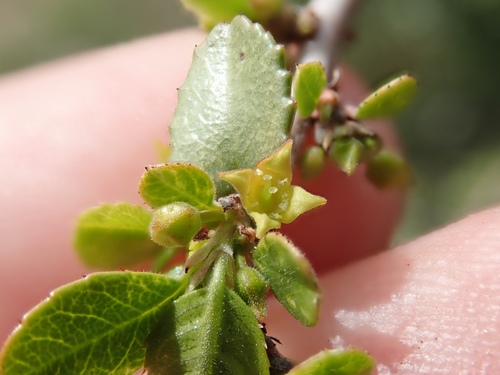
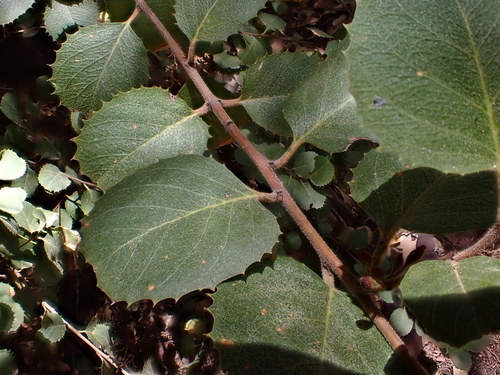
Hollyleaf Buckthorn
Rhamnus crocea
Care
full sun, part shade
very low
Medium, Slow; Tolerates clay but prefers well drained soil.
3–7ft tall , 7–7ft wide
Jan-Dec
Evergreen
Resistant
Friendly
Coastal scrub and chaparral from San Francisco Bay Area to Baja California, below 2000 ft elevation
Care Guide
Planting
Plant Hollyleaf Buckthorn in full sun with well-drained soil - it tolerates clay but will perform better if you amend heavy soil to improve drainage. Space it with room to spare since it grows 3–7 feet tall and has spiny branches; avoid planting near pathways or seating areas where the spines could catch you. The best planting time is fall or early spring. Consider planting at least two plants if you want reliable berry production, since this species may need cross-pollination.
After Planting
Water weekly during your plant's first summer, then taper off as it becomes established - by the second year, you should only need to water about once a month during summer, if at all. Once established, Hollyleaf Buckthorn is extremely drought-tolerant and thrives on neglect, making it ideal for low-water Bay Area gardens. The #1 mistake is overwatering; this native shrub evolved to survive on minimal water, so err on the side of dry rather than wet. Since this is an evergreen, it won't go dormant, but you can prune it lightly after flowering (winter or spring) if needed for shape or to manage the spiny growth.
Visit Calscape for more information about Hollyleaf Buckthorn
Endangered & Threatened Species Supported
California Species of Special Concern
Wildlife Supported
Insects

Primary larval host plant in California chaparral and oak woodlands

Larval food plant; overwinters as pupa in leaf litter

Specialist larval host; endemic California chaparral species

Pollen and nectar source during bloom period

Secondary host plant; larvae feed on new growth
Birds

Winter resident, relies on persistent fruit for survival

Important fruit source during fall migration and winter staging

Winter foraging on fruit; important caloric resource

Year-round resident, uses fruit opportunistically

Desert species; visits for mistletoe-like fruit consumption

Winter dietary supplement; ground forager in scrubland

Dense shrub provides cover and fruit resources in chaparral
Mammals

Browsed heavily in dry seasons; drought-tolerant native preferred