Madrone
Arbutus menziesii
Care
full sun, part shade
very low
well-drained, acidic; no summer water once established
20–80ft tall , 15–40ft wide
Mar-May · white
Evergreen
Resistant
Prized
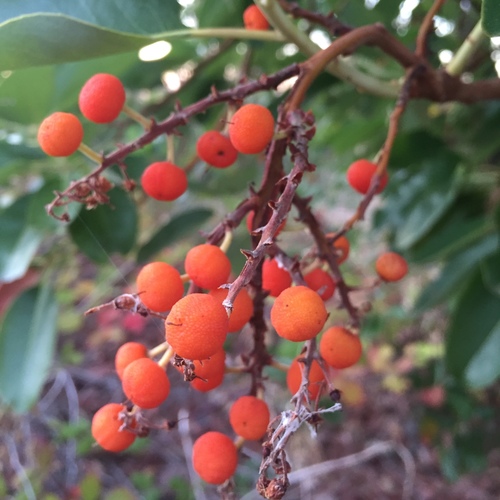
Berries eaten fresh or cooked
Supports up to 48 butterfly and moth species in Mediterranean California
Pacific Coast from British Columbia to Southern California mountains
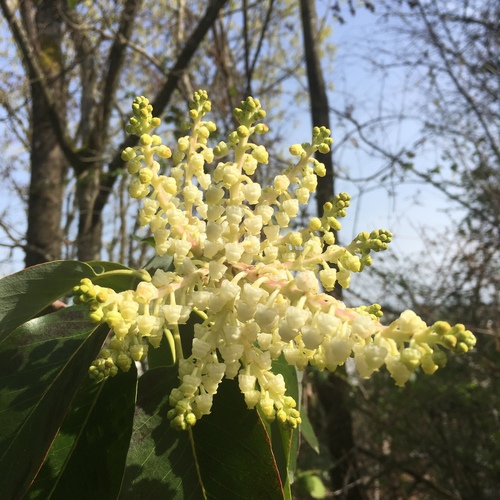
Urn-shaped white flowers in large drooping clusters
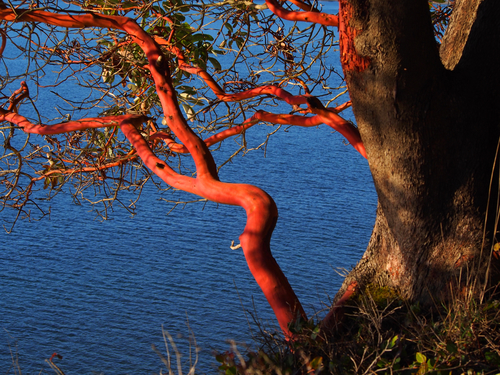
Stunning red peeling bark; difficult to transplant; do not irrigate in summer
Care Guide
Planting
Plant your Madrone in partial shade, ideally on a north-facing slope or location that mimics drier conditions - full sun can stress the plant in the Bay Area's hot summers. Choose a spot with fast to medium drainage; Madrone tolerates heavy soil and even serpentine soil, but waterlogged roots will kill it. Space according to your long-term vision: this tree grows slowly in our southern range (reaching 25 feet) but can eventually develop a substantial trunk, so give it room to spread.
After Planting
Water weekly during the first summer after planting, then transition to once monthly in summer once established - after that, aim for zero supplemental water during the hot season. Do not water in summer once the plant is mature; this is the #1 mistake people make and the quickest way to lose a Madrone. Expect slow, steady growth your first few years as the tree establishes itself, and prune only to remove dead or crossing branches. The leaves will brown and drop in fall, which is normal.
Endangered & Threatened Species Supported
California Species of Special Concern; monarch populations declining
California Species of Special Concern; population fluctuations noted
California Species of Special Concern
Wildlife Supported
Birds

Primary food source Sep-Nov during migration; critical staging fuel

Important fall/winter diet component; supports overwintering populations

Early spring nectar source Mar-May; important breeding season fuel

Irruptive use; relies on abundance in good mast years

Critical fall/winter food resource in coastal oak-madrone woodlands

Migration staging and wintering food source

Year-round resident; berries eaten when available

Fall/winter food source in madrone-dominated chaparral
+3 more species
Insects

Early spring pollinator during bloom season

Spring pollinator; queens provision colonies from madrone nectar

Wood-boring beetle specialist; larvae in heartwood and cambium

Specialist leafminer; larvae develop in madrone foliage

Spring pollinator overlapping madrone bloom
Early spring butterfly coinciding with madrone bloom

Spring adult butterfly nectar source

Spring bee foraging madrone flowers
+9 more species