← Back to results

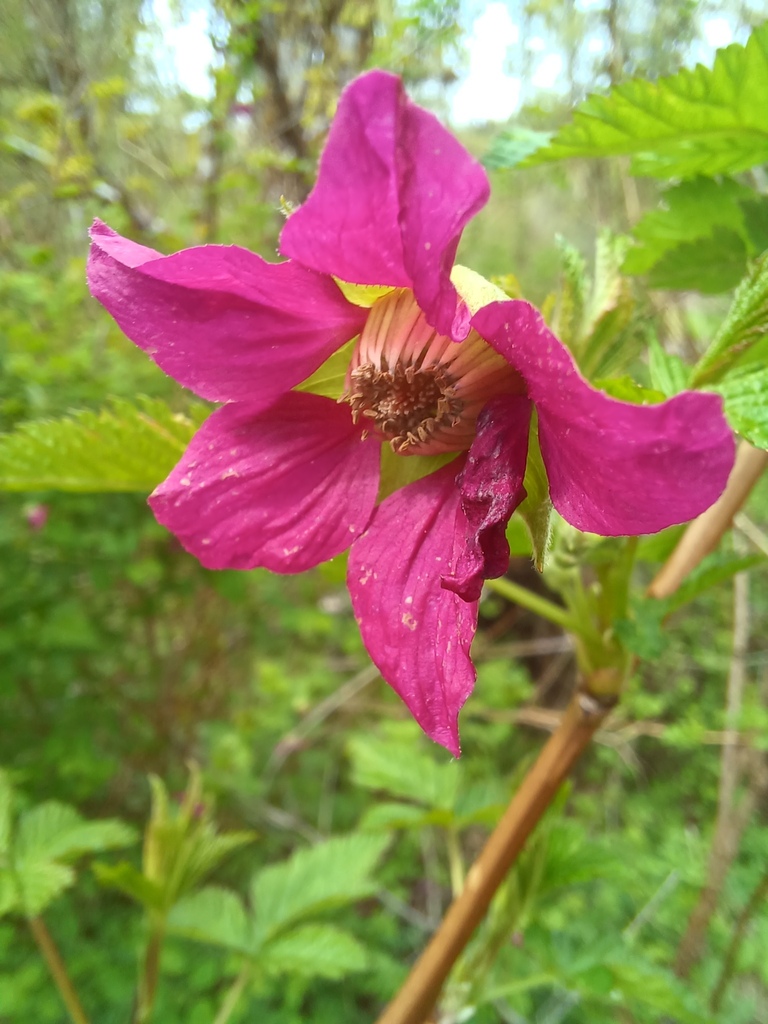
Salmonberry

Rubus spectabilis

perennial herb View on Calscape

Care

Water

low

Soil

Fast, Medium, Slow; Tolerates sandy or clay soils as long as moisture is adequate.

Size

3–13ft tall , 30–30ft wide

Bloom

Jan-Dec

Foliage

Deciduous

Flowers

Prized

Edible

Berries eaten fresh or made into jam; salmon-orange colored fruit

Keystone Plant

Supports up to 96 butterfly and moth species in Mediterranean California

Native Range

Coastal redwood forests and moist woodlands of northwestern California from Del Norte to Mendocino Counties, below 3000 ft elevation, in riparian and understory habitats.

Care Guide

Planting

Plant salmonberry in deep shade or part shade in fall or winter when the plant is dormant. It tolerates sandy or clay soils equally well as long as moisture is adequate, and accepts fast, medium, or slow drainage. Space it generously - this plant spreads vigorously through deep rhizomatous roots and can form large, dense patches, so give it room to expand or plan to contain it.

After Planting

Water weekly through your first summer; once established, you'll only need to water about once a month during summer or less. The #1 mistake is planting it too close to other plants or hardscape - those spreading roots and expanding form will take over more space than you expect. Salmonberry is deciduous and hardy to -5°F, so it will drop its leaves in winter and regrow in spring; no special winter care needed. Prune only as needed to manage its spread and shape, though the Calscape data doesn't specify timing or techniques.

Visit Calscape for more information about Salmonberry

Endangered & Threatened Species Supported

Band-tailed Pigeon Patagioenas fasciata
CA Special Concern

California Species of Special Concern

Wildlife Supported

Mammals

Fruit · Summer

Critical summer fruit resource, peak consumption July-August before berry season ends

Fruit · Summer

Seasonal fruit availability supplements summer diet

mod Elk
Fruit · Summer

Summer forage during berry fruiting season

Foliage · Year-Round

Browse stems and shoots for bark; more important in winter

Birds

Fruit · Summer

Critical breeding season fruit source, feeds young on berries June-July

Nectar · Spring

Early spring flowers provide nectar during breeding territory establishment

Fruit · Summer

Summer foraging resource for breeding birds

Fruit · Summer

Summer fruit foraging

Fruit · Summer

Summer diet supplement during breeding season

Nectar · Spring

Spring migration refueling stops

Insects

Nectar · Spring

Early spring blooms important for founding queens

Pollen · Spring

Specialist pollinator closely associated with Rubus flowers

Nectar · Spring

Spring pollinator for early flowers

Nectar · Spring

Spring-early summer nectar source

Pollen · Spring

Pollen resource for spring nesting females

mod Honey bee
Nectar · Spring

Early season pollen and nectar resource

Nectar · Spring

Early spring foraging for emerging bee populations

Where to Buy

Oaktown Native Plant Nursery

702 Channing Way, Berkeley

Wed-Sun 10am-5pm

1.0 mi (510) 387-9744 Website
East Bay Wilds

2110 Eighth St, Suite 202, Berkeley

Fri 9:30am-4pm (occasional Sat, call ahead)

1.5 mi (510) 409-5858 Website