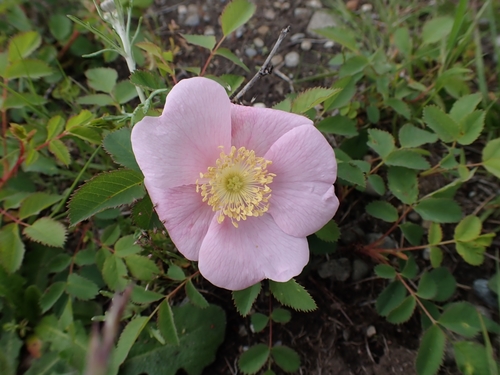
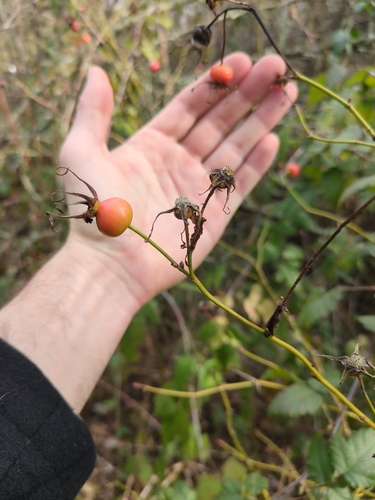
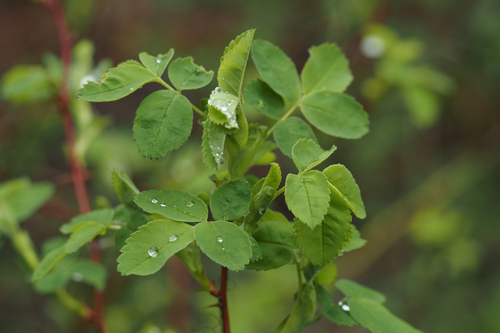
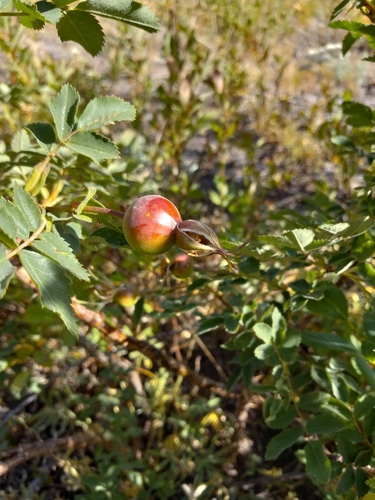
Nootka Rose
Rosa nutkana
Care
full sun, part shade
low
Fast, Medium, Slow; Tolerates sandy or clay soil as long as adequate moisture is available.
6–10ft tall
Mar-May
Deciduous
Friendly
Yes
Prized
Hips used for tea, jam, or eaten fresh; seeds removed
Supports up to 99 butterfly and moth species in Mediterranean California
Moist habitats and riparian areas throughout California from coastal regions to Sierra Nevada foothills, below 5000 ft elevation, extending to British Columbia and east to the Rocky Mountains.
Care Guide
Planting
Plant your Nootka Rose in full sun to part shade in a location with plenty of space - it naturally grows into a large, dense thicket and can reach 6–10 feet tall. Choose a spot away from walkways since the spines are sharp and dangerous. This rose tolerates sandy or clay soil as long as moisture is adequate, and it can handle any drainage type (fast, medium, or slow), making it quite forgiving about soil conditions.
After Planting
Water weekly for the first season to establish the plant, then reduce to once a week or less during summer once established. This is an easy-care plant that requires minimal intervention - it's cold hardy to -20°F and will naturally go dormant in winter. The main mistake people make is underestimating how large and aggressive this rose becomes; give it room to spread, and prune only if you need to control its size, ideally in late winter before spring growth begins.
Endangered & Threatened Species Supported
California Species of Special Concern; monarch populations declining
Wildlife Supported
Insects

Early spring forager, critical for spring colony establishment

Spring and early summer forager on rose flowers

Spring specialist forager

Spring through summer forager

Larval host plant; spring defoliation period

Spring through summer pollinator

Spring bloom period primary forage source

Spring migration and breeding season nectar source
+2 more species
Mammals

Browse stems, leaves, and young shoots; increased browsing in winter when preferred foods scarce
Birds

Fall and winter seed consumption; fall migration fuel

Fall and winter seed feeding