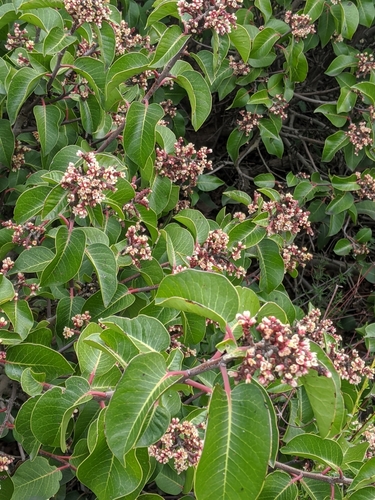
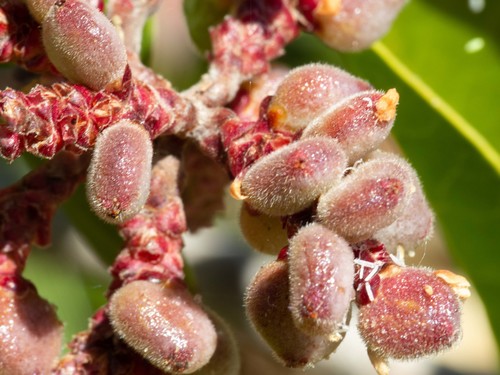
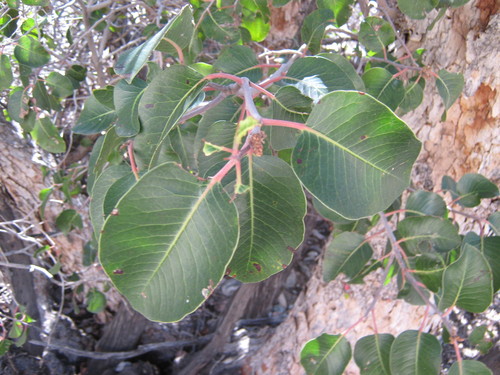
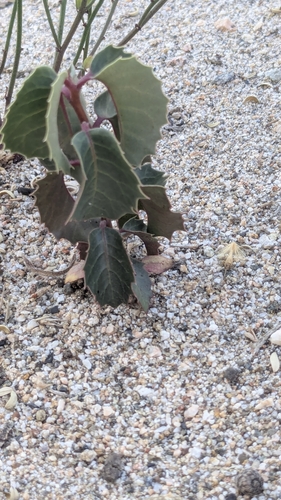
Sugarbush
Rhus ovata
Care
full sun, part shade
very low
Fast, Medium; Tolerates a variety of soils.
7–33ft tall , 30–30ft wide
Jan-Dec
Evergreen
Resistant
Berries used for drinks; leaves made into seasoning (sumac spice)
Chaparral and coastal sage scrub of southern California from Santa Barbara to San Diego Counties, and Baja California, below 2000 ft elevation.
Care Guide
Planting
Plant your Sugarbush in full sun for fastest growth, though it will tolerate part shade at a slower pace. It's tolerant of a wide variety of soils as long as drainage is fast to medium, making it forgiving in most Bay Area gardens. Space it generously - this plant grows fast and can reach 30 feet wide, so give it room to spread without crowding neighboring plants. Plant in fall or winter to establish before the dry season.
After Planting
Water weekly or every two weeks through your first summer to help it establish, then transition to once monthly summer watering once established. By year two or three, a happy Sugarbush shouldn't need any supplemental water and will stay green and lush through the dry season on its own. The biggest mistake people make is underestimating how large and wide this plant gets - it can reach 10 feet tall in just three years, so prune early and often if you need to contain it, cutting back branches in late winter or early spring before new growth emerges.
Endangered & Threatened Species Supported
California breeding populations endangered
California Species of Special Concern; monarch populations declining
California Species of Special Concern
California Species of Special Concern; population fluctuations noted
Wildlife Supported
Birds

Primary winter food source in desert scrub; migrates to higher elevations following fruit availability

Resident species; reliable year-round food resource in arid scrublands

Winter visitor to California chaparral; opportunistic frugivore

Winter resident; forages on fallen fruit and seeds

Spring migration fuel; stops to forage in chaparral and scrubland habitats
Insects

Specialist native bee; primary pollinator relationship

Native pollinator; early-season forager in chaparral
Larval host plant; caterpillars feed on leaves

Larval host plant; episodic population explosions correlate with plant mast years

Important larval host for this native checkerspot butterfly

Specialized larval host; larvae feed on developing leaves and flowers

Important native host plant; caterpillars feed on leaves

Early-season native bee; small colony forager
+5 more species
Arachnids

Hunts insects on and around plant structure; uses foliage for refuge