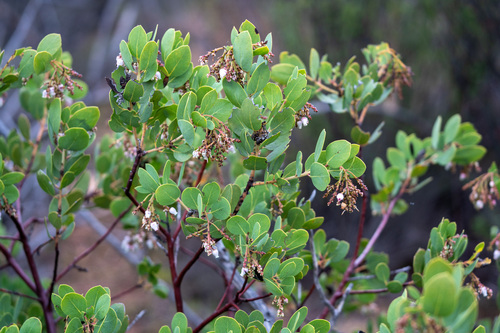
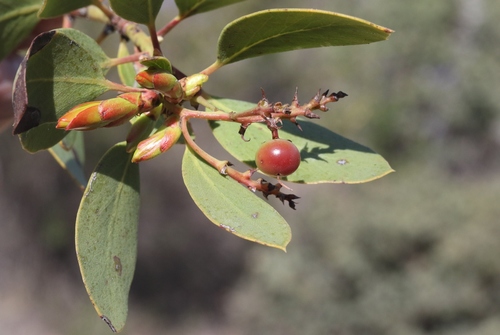
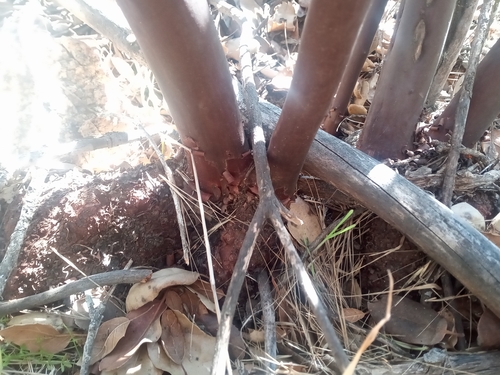
Rainbow Manzanita
Arctostaphylos rainbowensis
Care
full sun
very low
Fast, Medium; Prefers sandy or decomposed granite soil.
3–13ft tall , 3–16ft wide
Jan-Dec
Evergreen
Resistant
Prized
Berries eaten fresh or made into cider; traditional Indigenous use
Supports up to 68 butterfly and moth species in Mediterranean California
Chaparral near Rainbow Canyon in Kern County, 2000-3500 ft elevation
Care Guide
Planting
Plant your Rainbow Manzanita in full sun in fast-draining soil - sandy or decomposed granite is ideal. Space it where water won't pool around the base, since this rare shrub is extremely drought-tolerant once established and hates wet feet. Fall through early spring is the best planting window in the Bay Area. It will eventually reach 3 to 13 feet tall depending on conditions, so give it room to grow.
After Planting
Water weekly during your first summer to establish roots, then taper off to once monthly or less in summer once established - this plant truly wants to be dry. After the first year, skip summer water almost entirely unless there's a heat wave; overwatering is the #1 killer of manzanitas. The plant flowers in winter and spring with delicate white urn-shaped blooms, and it's naturally evergreen and will handle Bay Area cold down to 5°F. Beyond initial establishment, minimal pruning is needed - just remove any dead wood and enjoy the reddish-brown bark as your plant matures.
Endangered & Threatened Species Supported
California Species of Special Concern
Brush rabbit is a Species of Special Concern
California Species of Special Concern
Wildlife Supported
Birds

Important winter food source for overwintering populations in California

Consume manzanita berries during fall migration and early winter

Use dense manzanita branches for foraging and shelter

Consume berries as supplemental diet in fall months

Consume berries and cache seeds for winter food storage

Forage on small fruits in montane populations during winter

Forage on manzanita fruits in fall and early winter
Insects

Host plant for manzanita-specialist lepidopterans during larval development
Mammals

Primary browse plant; use dense manzanita thickets for shelter

Browse evergreen foliage, particularly important in winter when other vegetation scarce

Cache and consume manzanita seeds in fall and winter