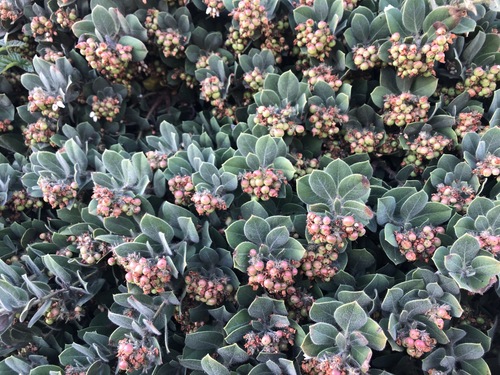
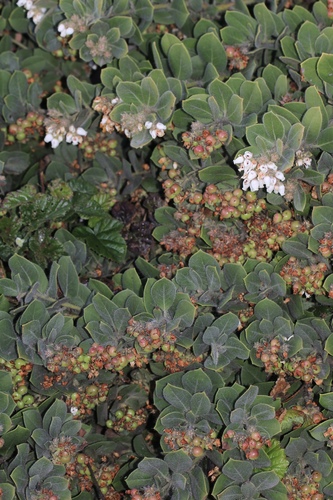
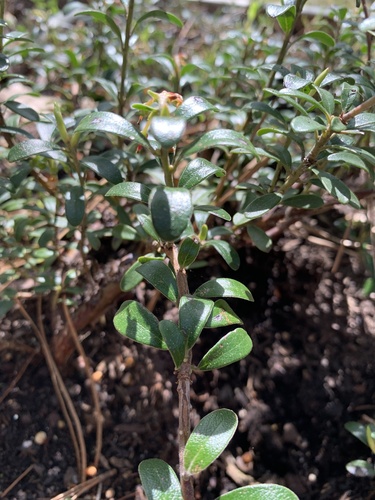
Green Supreme Manzanita
Arctostaphylos uva-ursi 'Green Supreme'
Care
part shade, full sun
very low
Fast, Medium; Tolerates a variety of soils but prefers sandy loam. Tolerates serpentine soil..
2–2ft tall , 10–10ft wide
Jan-Dec
Evergreen
Resistant
Friendly
Prized
Berries eaten fresh or made into cider; traditional Indigenous use
Supports up to 68 butterfly and moth species in Mediterranean California
Cultivar of Arctostaphylos uva-ursi, which occurs in montane areas of northern California and the Sierra Nevada, 4000-8000 ft elevation.
Care Guide
Planting
Plant Green Supreme Manzanita in full sun to part shade in a location with fast to medium drainage; it tolerates a variety of soils including sandy loam and even serpentine soil, so drainage matters more than soil type. The best planting time in the Bay Area is fall or early winter when the plant can establish roots before summer heat. Space according to its mature size of 2 feet tall and wide, and pair it with other drought-tolerant natives that thrive in similar conditions.
After Planting
Water moderately during the first growing season to keep soil moist, then transition to very low water once established - this plant is extremely drought-tolerant and prefers dry conditions. The #1 mistake Bay Area gardeners make is overwatering; Green Supreme Manzanita is adapted to low-water Mediterranean climates and will develop root rot if kept wet. Prune lightly after flowering if needed to maintain shape, and expect year-round blooms from January through December.
Visit Calscape for more information about Green Supreme Manzanita
Wildlife Supported
Mammals

Critical fall hyperphagia fuel source; berries consumed August-October before hibernation

Year-round herbivory on leaves; overwinter food source in montane/alpine habitat

Important fall and winter food source when other prey scarce
Birds

Fall migration staging; critical refueling on berries September-October

Migratory flocks exploit manzanita berry crops in late summer-fall

Important winter food source in California foothills and mountains
Insects

Early spring emergence; larvae exploit new manzanita leaf growth

Larvae feed on manzanita foliage; multiple generations spring-summer

Early spring forager; critical pollen and nectar source when other flowers scarce

Spring emergence and pollen provisioning for larvae

Diurnal nectar forager in spring

Spring pollen source for early-emerging solitary bee species

Larval host plant in California; caterpillars feed on young foliage