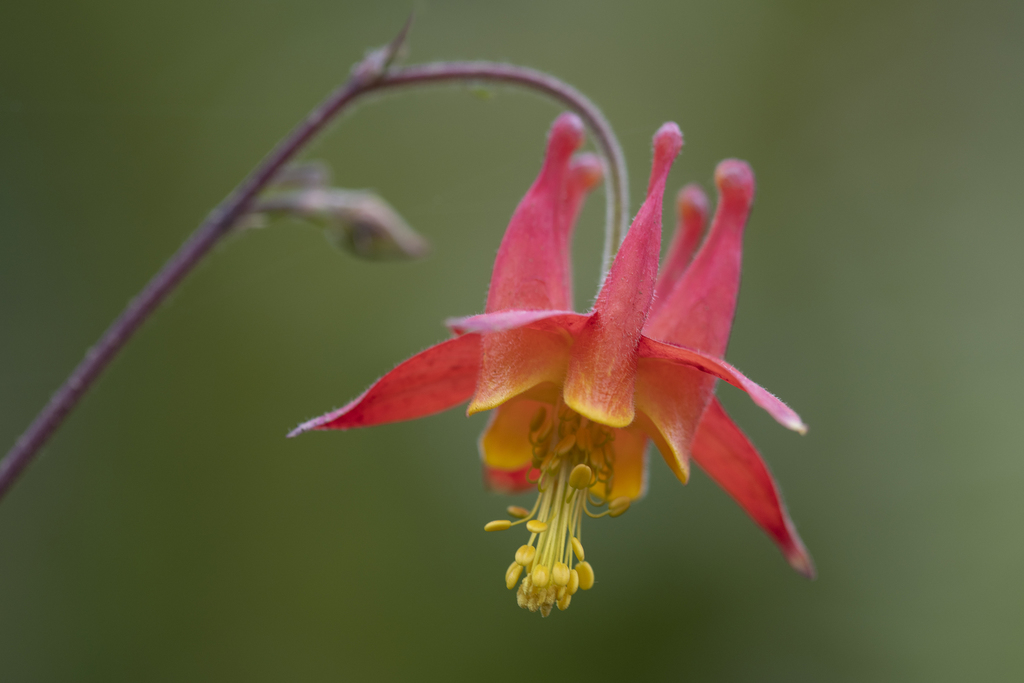
Western Columbine
Aquilegia formosa
Care
part shade
moderate
moist, well-drained; along streams and seeps
1–3ft tall , 1–2ft wide
Apr-Jul · red and yellow
Deciduous
Resistant
Friendly
Prized
Western North America from Alaska to Baja California
Nodding red and yellow spurred flowers; classic columbine form
Goes dormant in summer if dry; self-sows in moist gardens
Care Guide
Planting
Plant Western Columbine in part shade with moist, well-draining soil rich in organic material - think woodland conditions. Space plants about 1.5 to 3 feet apart depending on your desired mature size. Plant in spring or fall when the Bay Area soil is cool and moist. This plant tolerates serpentine soil if that's what you're working with, but amending with compost will give it the best start.
After Planting
Water weekly through your first summer to establish the plant, then taper back - once established, it needs only moderate water and can go up to a month between waterings in summer. Deadhead spent flowers to prevent excessive self-seeding, though you can let some go to seed if you want more plants. Expect the plant to go dormant and disappear in winter; this is normal. The #1 mistake is overwatering established plants - Western Columbine evolved in moist but well-draining stream-side spots, not wet clay, so err on the side of drier once it's settled in.
Endangered & Threatened Species Supported
Federal Threatened; California Endangered; Species of Special Concern
Wildlife Supported
Birds
Resident California species; primary nectar source Apr-Jul
Early spring migrant; fuels northbound migration Apr-May
Spring migration staging resource Mar-May
Insects
Spring emergence and colony growth Apr-Jul
Early spring emergence; provisioning larvae Apr-Jun
Spring-early summer forage; colony establishment Apr-Jun
Spring emergence; primary flight period Apr-Jul
Spring emergence and colony establishment Apr-Jul
Spring foraging Apr-Jul; important pollen resource
Spring generation adults; early season nectar source Apr-Jun
Spring-summer active foraging Apr-Jul
+1 more species