← Back to results

Western Azalea

Rhododendron occidentale

Care

Sun

part shade

Water

moderate

Soil

moist, acidic, well-drained; along streams

Size

4–15ft tall , 4–10ft wide

Bloom

Apr-Jul · white, pink, yellow

Foliage

Deciduous

Deer

Resistant

Fragrant

Yes

Flowers

Prized

Native Range

Pacific Coast mountains from southern Oregon to San Diego County

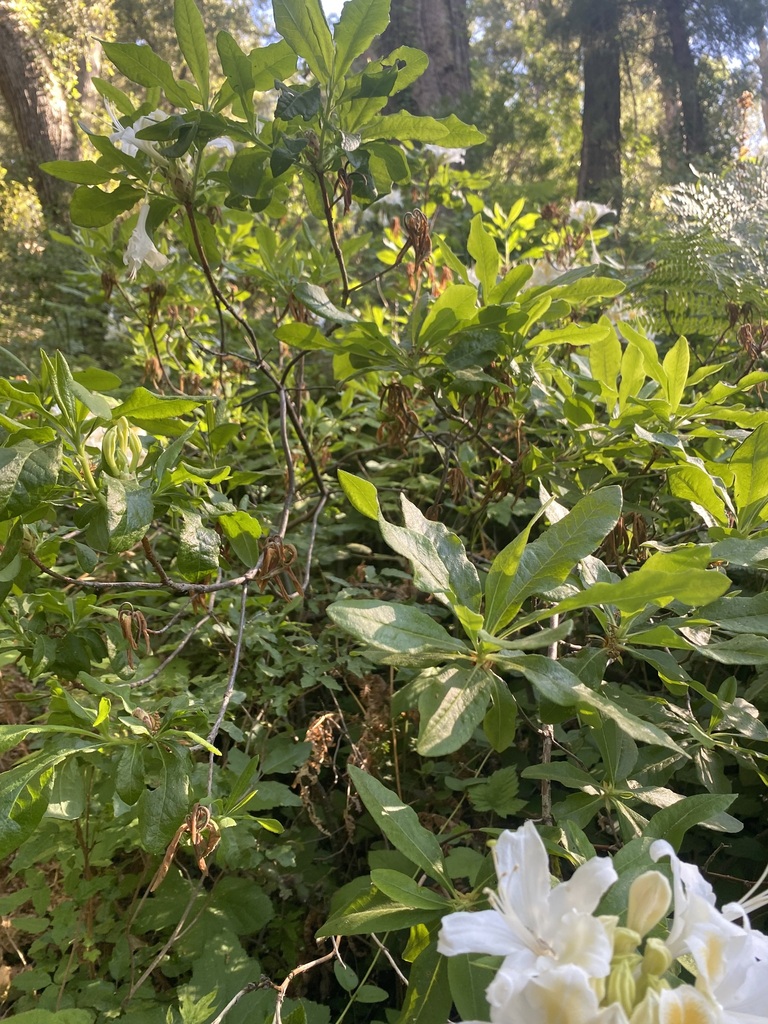
Large fragrant funnel-shaped flowers, white flushed pink with yellow blotch

Intensely fragrant; needs consistent moisture; spectacular in bloom

Care Guide

Planting

Plant your Western Azalea in partial shade - ideally at the edge of a woodland where it gets some sun for flowering but afternoon shade protection. Dig into moist, acidic soil rich with organic matter like peat or pine needles; Western Azalea is native to forested areas and won't thrive in poor, compacted soil. Space it with room to reach its mature size of 8–12 feet tall. Plant in fall or early spring to establish before summer heat.

After Planting

Water weekly for the first season, then taper to once weekly during summer once established. Expect your plant to go completely leafless in winter - this is normal and not a sign of death. The biggest mistake Bay Area gardeners make is overwatering after the first year or planting in full sun; Western Azalea evolved getting summer fog drip, not intense afternoon heat, so if you're not getting natural moisture from fog, supplement with deep watering rather than frequent shallow watering.

Visit Calscape for more information about Western Azalea

Endangered & Threatened Species Supported

Monarch butterfly Danaus plexippus
CA Special Concern

California Species of Special Concern; monarch populations declining

Wildlife Supported

Birds

Nectar · Spring

Critical spring migration fuel source, April-May northbound migration

Nectar · Spring

Spring breeding season nectar source, April-June

Shelter · Year-Round

Nesting and cover in dense deciduous growth, March-August breeding

Shelter · Winter

Winter roosting and cover in montane riparian areas, November-March

Insects

Nectar · Spring

Early spring foraging, April-May emergence and colony establishment

Nectar · Summer

Migrant nectar source during summer dispersal and fall migration staging

Nectar · Spring

Spring and early summer foraging, April-June peak bloom overlap

Larval Host · Summer

Larval host plant, caterpillars utilize foliage May-July

Nectar · Spring

Spring nesting season food source, April-May

Larval Host · Spring

Larval host plant, multiple generations April-July

Larval Host · Spring

Larval host plant, caterpillars feed on foliage April-June

Larval Host · Spring

Larval host plant, caterpillars feed on foliage May-June

+1 more species

Where to Buy

Oaktown Native Plant Nursery

702 Channing Way, Berkeley

Wed-Sun 10am-5pm

1.0 mi (510) 387-9744 Website
East Bay Wilds

2110 Eighth St, Suite 202, Berkeley

Fri 9:30am-4pm (occasional Sat, call ahead)

1.5 mi (510) 409-5858 Website