← Back to results

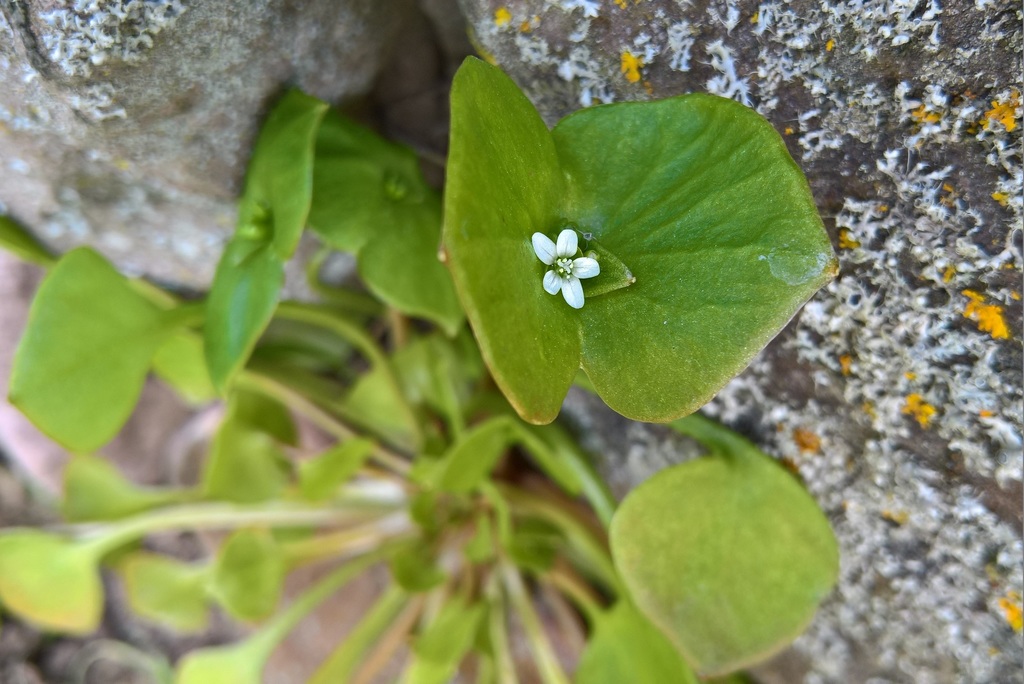
Miner's Lettuce*

Claytonia perfoliata subsp. intermontana

Care

Sun

part shade

Water

low

Soil

Medium; Tolerates a variety of soils as long as winter moisture is provided.

Size

1–1ft tall , 1–1ft wide

Bloom

Jan-Dec

Container

Friendly

Edible

Round leaves and tender stems eaten raw in salads or cooked

Native Range

Widespread in montane and foothill regions from the North Coast Ranges to the southern Sierra Nevada, 2000-9000 ft elevation

Care Guide

Planting

Plant miner's lettuce in late fall to early winter in a spot with partial shade and medium-draining soil - it tolerates a variety of soil types as long as winter moisture is available. Sow the tiny black seeds directly onto bare soil in a protected area; mix them with fine sand in a salt shaker and sprinkle onto the surface, then gently scratch in and tamp for good seed-to-soil contact. This Bay Area native thrives in vernally moist conditions and pairs well as an understory plant beneath oaks or larger shrubs.

After Planting

Water regularly during the growing season to keep soil moist through winter and spring, then taper off once established - summer irrigation should be no more than twice a month. Expect delicate white flowers from February through May or June, and plan for the plant to complete its annual cycle naturally; miner's lettuce typically re-seeds itself, so the main mistake is overwatering during summer dormancy, which can rot the succulent leaves. You can harvest the round, edible leaves throughout the growing season without killing the plant.

Visit Calscape for more information about Miner's Lettuce*

Wildlife Supported

Birds

Seeds · Fall

Important seed source during fall and winter when other food sources decline

Seeds · Fall

Critical fall migration fuel source, September-November

Seeds · Year-Round

Resident species utilizing this resource throughout the year

Seeds · Spring

Spring migration staging fuel and breeding season diet

Seeds · Winter

Winter visitor relying on seed availability

Foliage · Spring

Spring migration diet supplement

Seeds · Year-Round

Opportunistic forager, especially important during winter months

Seeds · Fall

Fall and winter ground-foraging staple

Insects

Pollen · Spring

Early season pollen and nectar source for emerging colonies

Pollen · Spring

Critical early spring pollen source for nesting females

Larval Host · Spring

Larval host plant for spring and summer generations

Pollen · Spring

Spring and early summer nectar and pollen resource

Larval Host · Spring

Spring specialist utilizing young host plants

Larval Host · Spring

Larval host plant for spring generation caterpillars

Mammals

Foliage · Spring

Early spring foliage browsing when plant is young and tender

Where to Buy

Native Here Nursery

101 Golf Course Dr, Tilden Regional Park, Berkeley

Sat 10am-2pm

3.0 mi (510) 549-0211 Website