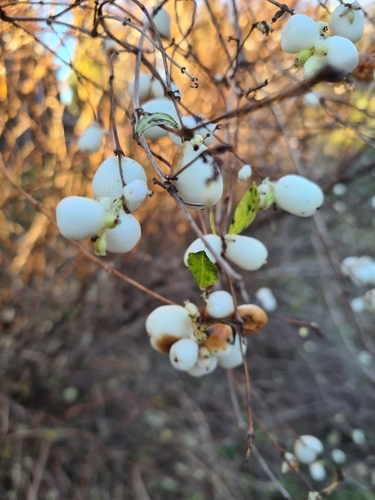
Common Snowberry
Symphoricarpos albus var. laevigatus
Care
part shade
low
Medium; Tolerates a variety of soils.
3–6ft tall , 6–6ft wide
Mar-Aug
Deciduous
Friendly
Oak woodland, chaparral, and coniferous forests throughout California, from coastal areas to 5000 ft elevation, extending to Washington and Oregon
Care Guide
Planting
Plant your snowberry in partial shade or deep shade - it thrives in the shade conditions that challenge other plants. It tolerates a variety of soils with medium drainage, so unless you have extremely compacted clay or standing water, your existing soil will work fine. Plant in fall or winter when the shrub is dormant, and space multiple plants 3–4 feet apart if you're creating a hedge or dense planting, since snowberry naturally forms thickets.
After Planting
Water weekly for the first summer to establish the plant, then transition to minimal supplemental water once established - aim for no more than 3 times per month during Bay Area summers. Snowberry is deciduous, so it will drop its leaves in winter; this is normal and not a sign anything is wrong. The main mistake people make is overwatering: this plant is genuinely drought-tolerant once established, and excess water is more harmful than neglect. Prune in late winter or early spring if you need to shape it or remove dead wood, but snowberry requires minimal pruning overall.
Wildlife Supported
Birds

Critical fall migration fuel source; berries consumed heavily Sept-Nov during southbound migration

Fall migration staging fuel; berries consumed during Aug-Oct southbound passage

Stopover habitat during fall migration; berries critical for energy reserves

Fall and winter browse; berries provide essential winter nutrition in mountain habitats

Fall and winter foraging; year-round resident in California using berries seasonally

Fall and winter food source in Pacific Northwest; extends through winter in mild years

Fall migration and winter foraging; one of few warblers consuming fruits during migration
Insects

Spring pollinator in western North America; visits flowers

Early spring nectar source when flowers bloom

Larval food plant; caterpillars feed on foliage May-June

Larval food plant; caterpillars feed on foliage in spring-early summer

Early spring pollinator; native California bumblebee visiting flowers

