← Back to results

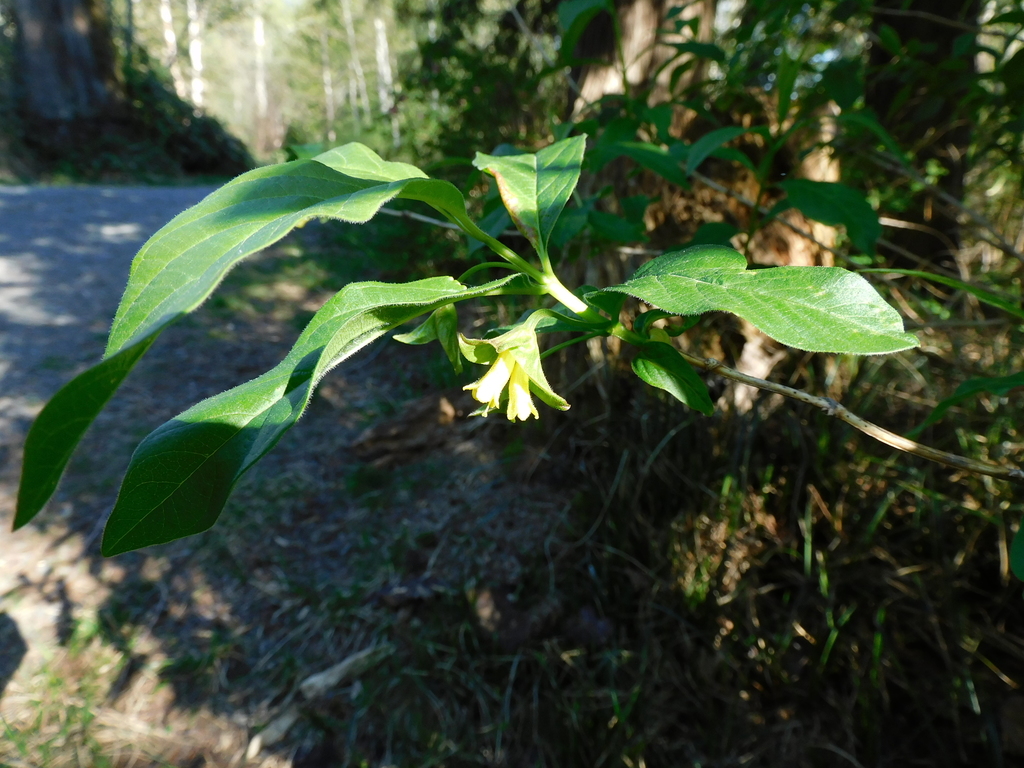
Bearberry Honeysuckle

Lonicera involucrata var. ledebourii

Care

Sun

full sun, part shade

Water

low

Soil

Fast; Prefers moist, sandy soil.

Size

2–16ft tall , 3–4ft wide

Bloom

Jun-Aug

Foliage

Deciduous

Container

Friendly

Flowers

Prized

Edible

Berries eaten fresh, traditional Indigenous food

Native Range

Riparian areas and moist woodlands of the Sierra Nevada and northern California mountains from Modoc County to Tulare County, 3000-7000 ft elevation

Care Guide

Planting

Plant your Bearberry Honeysuckle in full sun or part shade in well-draining, sandy soil - it prefers moist conditions but won't tolerate soggy roots. The best time to plant is in fall or early spring so the roots can establish before summer heat. This coastal California native (var. ledebourii with red-orange flowers) is cold-hardy and low-maintenance, making it forgiving for Bay Area gardens across a range of elevations.

After Planting

Water weekly for the first summer after planting, then reduce to once a week or less once established - this plant is drought-tolerant and actually prefers drier conditions once its roots are in. Expect it to go dormant and lose its leaves in winter, which is completely normal. The #1 mistake is overwatering: this shrub thrives on less attention than you might think, so resist the urge to keep the soil constantly wet.

Visit Calscape for more information about Bearberry Honeysuckle

Endangered & Threatened Species Supported

Edith's checkerspot butterfly Occidryas editha
Federal: Threatened, CA: Endangered, CA Special Concern

Listed under ESA; California populations endangered; multiple subspecies with varying conservation status

Wildlife Supported

Insects

Larval Host · Year-Round

Larval host plant, critical for caterpillar development

Nectar · Spring

Spring-early summer nectar resource for California populations

Larval Host · Year-Round

Larval host plant for California populations

Nectar · Spring

Early season nectar and pollen for colony establishment

mod Honey bee
Nectar · Spring

Spring nectar forage for wild and managed colonies

Nectar · Summer

Summer adult nectar source Jun-Aug

Birds

Fruit · Fall

Important late-season fruit resource Sep-Nov

Fruit · Fall

Fall migration fuel source Sep-Oct during southbound migration

Nectar · Spring

Spring breeding season nectar resource

Fruit · Fall

Fall-winter berry resource in California

Nectar · Spring

Early spring nectar source for breeding season preparation

Fruit · Fall

Fall-winter food source, especially in montane California

Fruit · Fall

Late season fruit resource for year-round California residents

Where to Buy

Oaktown Native Plant Nursery

702 Channing Way, Berkeley

Wed-Sun 10am-5pm

1.0 mi (510) 387-9744 Website
East Bay Wilds

2110 Eighth St, Suite 202, Berkeley

Fri 9:30am-4pm (occasional Sat, call ahead)

1.5 mi (510) 409-5858 Website
Native Here Nursery

101 Golf Course Dr, Tilden Regional Park, Berkeley

Sat 10am-2pm

3.0 mi (510) 549-0211 Website
Yerba Buena Nursery

12511 San Mateo Rd, Half Moon Bay

Tue-Sat 9am-4pm

12.0 mi (650) 851-1668 Website