Manzanita (Vine Hill)
Arctostaphylos densiflora
Care
full sun
very low
well-drained, acidic; no summer water
3–8ft tall , 4–8ft wide
Jan-Mar · pink, white
Evergreen
Resistant
Friendly
Prized
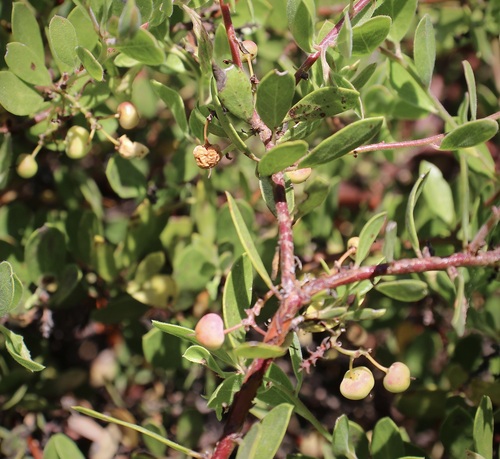
Berries made into cider; traditionally processed for food
Supports up to 68 butterfly and moth species in Mediterranean California
Endemic to Sonoma County; cultivars widely adapted
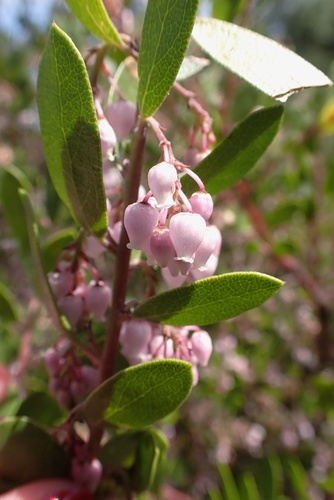
Clusters of small urn-shaped pink to white flowers
Beautiful red bark; 'Howard McMinn' is outstanding compact cultivar
Care Guide
Planting
Plant your Vine Hill Manzanita in full sun (coastal sites) or sun to part shade (inland Bay Area locations). It tolerates a variety of soils but performs best in well-drained loam with acidic soil - avoid heavy clay or areas prone to standing water. Space plants to allow for their spreading, low-growing habit, as stems will naturally root where they contact soil. Plant in fall or winter to establish before the dry season.
After Planting
Water weekly for the first summer to establish roots, then reduce to twice monthly or less once established - this plant is drought-tolerant and needs no summer water after year one. Vine Hill Manzanita requires virtually no pruning and is evergreen year-round. The biggest mistake people make is overwatering; this is a chaparral native that rots in wet soil, so err on the dry side once established. Enjoy pink flower clusters in winter and hummingbird visitors - the plant does the rest.
Visit Calscape for more information about Manzanita (Vine Hill)
Endangered & Threatened Species Supported
California Species of Special Concern; monarch populations declining
Brush rabbit is a Species of Special Concern
Wildlife Supported
Birds

Critical early nectar source for overwintering and breeding males Jan-Mar

Spring berries consumed after ripening Mar-May

Winter berry resource for overwintering populations
Insects

Winter pollen source for nesting females Jan-Mar

Early season nectar critical for queen establishment

Early season nectar source Jan-Mar when few other plants bloom

Early spring nectar source Jan-Mar

Early pollen and nectar source for hive nutrition

Specialist herbivore on manzanita foliage; sustains predatory insects

Potential larval host plant, utilized during spring reproduction
Mammals

Year-round browse on evergreen foliage and shelter in dense growth