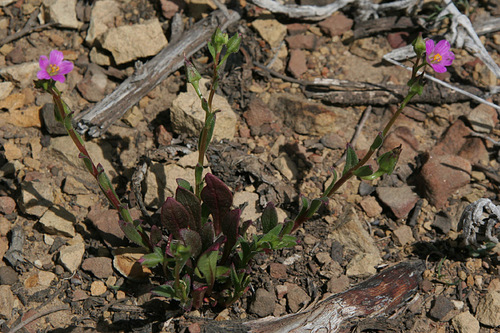
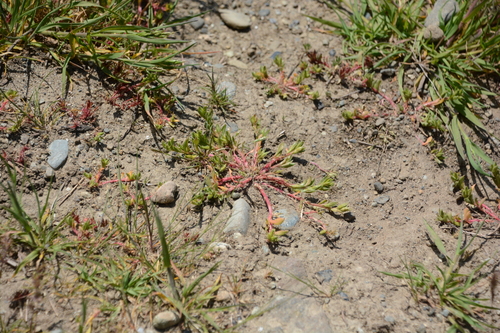
Red maids
Calandrinia ciliata
Care
full sun, part shade
very low
well-draining, sandy or gravelly soil
0–0ft tall , 0–1ft wide
Mar-Jun
Deciduous
Resistant
Friendly
Prized
Leaves eaten fresh in salads; seeds eaten raw or cooked.
Coastal scrub and sandy areas from San Francisco County to Santa Barbara County, below 1500 ft elevation.
Care Guide
Planting
Plant red maids in full sun to part shade in well-draining, sandy or gravelly soil - they're not fussy about soil type and actually prefer lean conditions. Space them about 6-12 inches apart since they stay small (under 6 inches tall). Spring is the best time to plant, giving them the growing season ahead. These plants bloom March through June, so get them in the ground by early spring for a full show of color.
After Planting
Water weekly during the first summer to help them establish, then cut back significantly - red maids are extremely drought tolerant once settled and actually prefer dry conditions. Stop supplemental watering by fall; they need almost no summer irrigation after year one and will rot if overwatered. The #1 mistake is treating them like thirsty plants: resist the urge to water, especially in summer. They're deciduous, so expect them to disappear in winter, which is completely normal.
Wildlife Supported
Birds

Important seed source during post-breeding season and winter months in California grasslands and scrub

Critical winter food source for migratory and resident populations Oct-Apr

Important winter staging and overwintering food source during migration periods

Seeds consumed during breeding season and summer months

Reliable seed resource across seasons in coastal scrub and grassland habitats

Ground-foraging bird utilizing seeds in scrub and grassland habitats throughout year
Insects

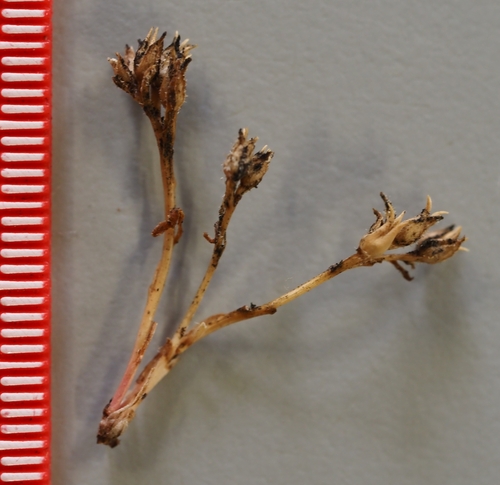
Pathogenic fungus; host-specific relationship affecting plant health

Host plant for larvae; multiple generations Mar-Oct in California

Adults feed on flowers during flight season; larvae use other host plants