Toyon
Heteromeles arbutifolia
Care
full sun, part shade
very low
adaptable; tolerates clay and poor soils
6–15ft tall , 6–15ft wide
Jun-Jul · white
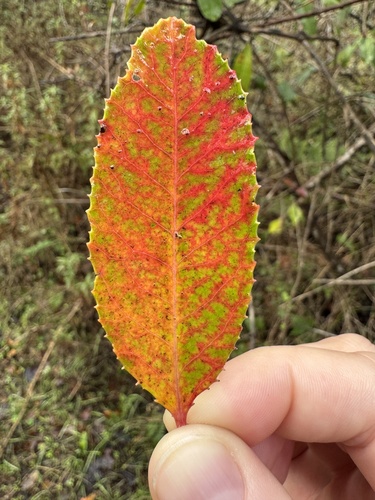
Evergreen
Resistant
Friendly
Prized
Berries eaten fresh or made into jam; traditionally used by Indigenous peoples
Throughout California below 4000 ft elevation
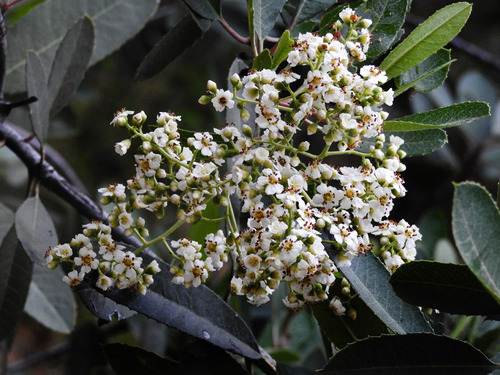
Flat clusters of small white flowers followed by bright red berries
Hollywood named for this plant; Christmas berry; excellent hedge or screen
Care Guide
Planting
Plant your toyon in full sun or part shade - if you're in the warmer, drier parts of the Bay Area, part shade will help it thrive. This plant is incredibly soil-tolerant and will grow in clay, sand, or even serpentine soil, so don't worry about amending heavily; just make sure your drainage is adequate (fast to medium drainage is ideal, though it handles slow drainage too). Plant in fall or winter for best establishment, and space according to your mature size goals - toyon can grow up to 10 feet in three years under good conditions.
After Planting
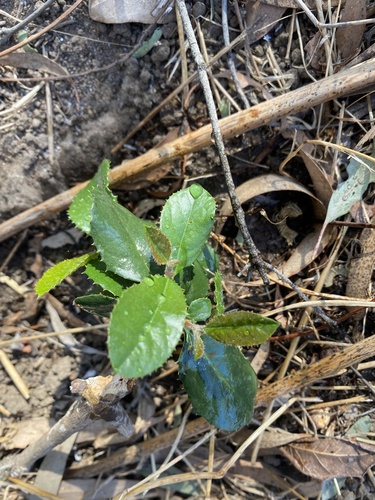
Water your toyon twice a month during its first growing season to help it establish, then transition to very low water - you can stop irrigating entirely once it's established. Year one will likely be vigorous growth, so don't be alarmed by its speed. Prune only as needed for shape or hedge purposes, and note that toyon is evergreen and will leaf out year-round. The #1 mistake Bay Area gardeners make is overwatering; this is a drought-adapted native that actively dislikes excess irrigation, so resist the urge to baby it once summer arrives.
Endangered & Threatened Species Supported
Channel Islands endemic subspecies
California Species of Special Concern
California Species of Special Concern
Wildlife Supported
Birds

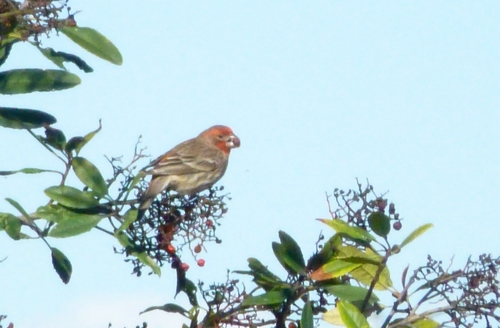
Critical winter food source Nov-Feb, especially during migration and overwinter periods

Important fall and winter berries, supports migration and overwintering populations Sep-Feb

Year-round resident utilizing berries primarily Oct-Feb

Reliable winter fruit source, especially important in fall migration Sep-Feb

Migratory species, nectar available during Jun-Jul bloom and early breeding season

Year-round resident, nectar source during Jun-Jul bloom period

Year-round resident, berries important winter food source Oct-Feb

Year-round to seasonal resident depending on region, Jun-Jul nectar source
+4 more species
Insects

Documented larval host plant, caterpillars feed on foliage Mar-Jun
Native bee pollinator, Jun-Jul bloom period
Mammals

Important supplemental food resource, especially on Santa Cruz Island Sep-Feb