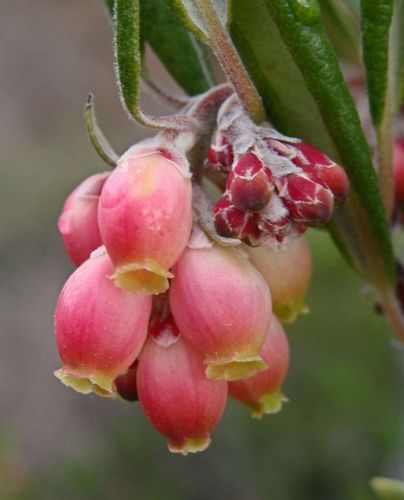
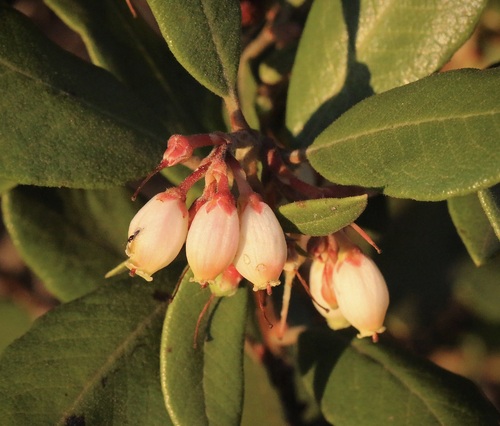
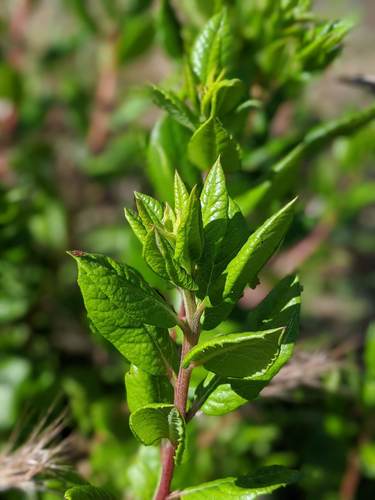
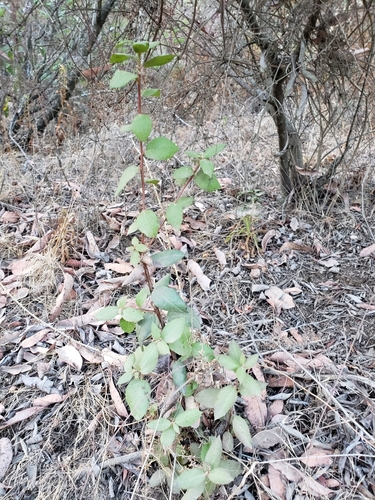
Mission Manzanita
Xylococcus bicolor
Care
full sun
very low
Medium; Tolerates most soils as long as drainage is fast.
5–20ft tall , 5–20ft wide
Jan-Dec
Deciduous
Resistant
Prized
Berries eaten fresh; similar to manzanita berries
San Diego County chaparral and coastal sage scrub of the Peninsular Ranges, below 2500 ft elevation.
Care Guide
Planting
Plant Mission Manzanita in early winter in full sun on a north-facing slope if possible. It needs fast-draining soil - amend with rocks and mulch around the roots to prevent summer moisture loss, and space it where its roots stay shaded while its leaves get full sun. This plant tolerates most soils as long as drainage is excellent, so avoid heavy clay or areas that collect water.
After Planting
Water lightly once every two weeks during your first summer after planting. After establishment, it can survive dry months with no water, though you can water up to once monthly for the first 2–3 years if you want; after that, let it naturalize and stop supplemental watering. The #1 mistake is overwatering - this is a chaparral plant built for drought, and excess moisture is far more dangerous than dry spells. It's extremely long-lived (some plants over 400 years old), so patience with slow growth is part of the deal.
Wildlife Supported
Birds

Dense shrub provides nesting and cover habitat

Spring nectar source during breeding season
Insects

Early season manzanita nectar source

Spring bloom period nectar foraging

Specialist pollen feeder on manzanita flowers during bloom

Primary spring pollinator of manzanita flowers

Larval food plant for caterpillar development

Caterpillar host plant for multiple generations

Early season nectar source when manzanita blooms

Adult nectar feeding on manzanita flowers
+2 more species
Arachnids

Lichen colonizes manzanita bark providing microhabitat