← Back to results

Santa Barbara Sedge

Carex barbarae

Care

Sun

full sun, part shade

Water

moderate

Soil

moist; tolerates seasonal flooding and clay

Size

1–3ft tall , 2–4ft wide

Bloom

Apr-Jun · brown

Foliage

Evergreen

Deer

Resistant

Container

Friendly

Native Range

California coastal and interior valleys

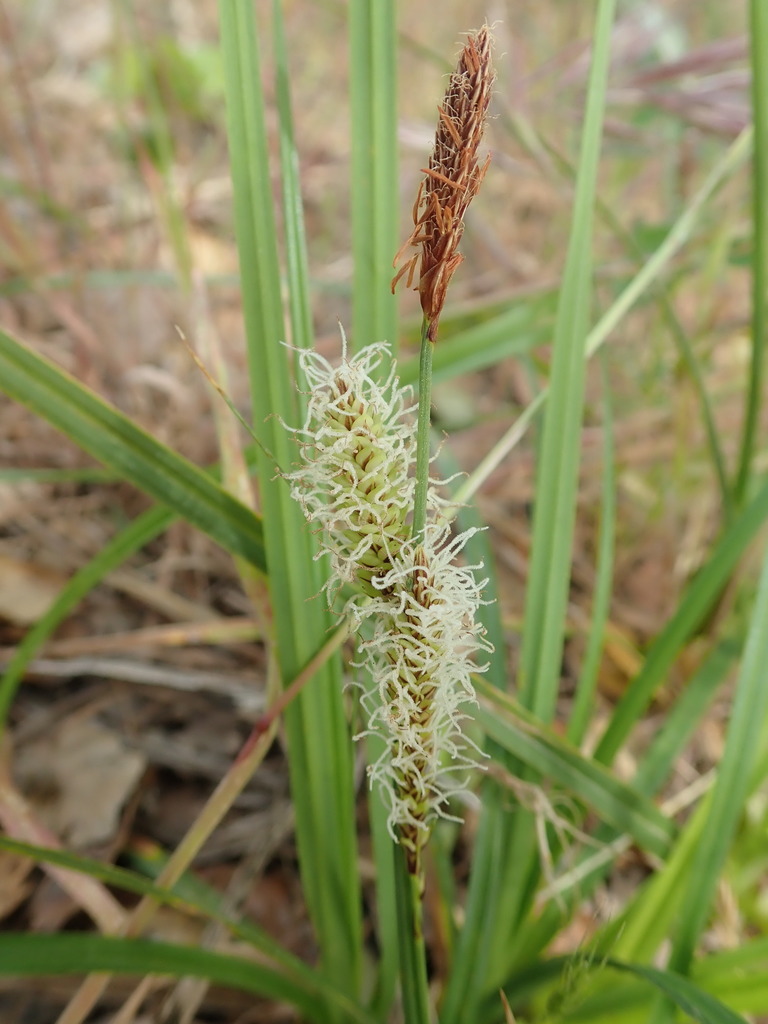
Brown flower spikes on triangular stems

Vigorous grower; excellent for moist areas; rhizomatous spreader

Care Guide

Planting

Plant Santa Barbara Sedge in partial shade in a location with moist to wet soil - it thrives in areas that stay consistently damp, like pond margins or bioswales. This sedge tolerates clay and seasonal flooding, making it ideal for Bay Area low spots that hold water. Plant in spring or fall when the soil is workable. Because this plant spreads aggressively wherever moisture is present, consider planting it in a container unless you want it to colonize an area - this gives you complete control over its spread.

After Planting

Water weekly for the first summer to help establish the plant, then reduce to once weekly or less once established, depending on your soil moisture. Santa Barbara Sedge is evergreen and requires minimal pruning - just remove any dead or damaged stems as needed. The #1 mistake is planting it in the ground without understanding its aggressive spreading habit; if you're not prepared for it to expand over time in wet conditions, a container is your best bet. It will tolerate cold down to 15°F, so it's well-suited to Bay Area winters.

Visit Calscape for more information about Santa Barbara Sedge

Endangered & Threatened Species Supported

Western toad Bufo boreas
CA Special Concern

California Species of Special Concern; Declining due to disease and habitat loss

Western Terrestrial Garter Snake Thamnophis elegans
CA Special Concern

California Species of Special Concern due to habitat loss and localized population declines

Wildlife Supported

Birds

Seeds · Year-Round

year-round resident utilizing sedge seeds; nesting in dense clumps

Seeds · Winter

forages on sedge seeds during winter months and spring migration staging

Nesting · Spring

nests in adjacent shrubs; forages on insects among sedge foliage during breeding season

Seeds · Spring

spring migration fuel source in coastal sage scrub habitats

Reptiles

Shelter · Year-Round

dense rhizomatous growth provides refugium and overwintering shelter

Amphibians

Shelter · Year-Round

moist sedge mats provide shelter and breeding habitat near seeps

Mammals

Shelter · Year-Round

constructs nests among dense sedge clumps for protection

Foliage · Year-Round

browses evergreen foliage year-round in Santa Barbara coastal regions

Where to Buy

Oaktown Native Plant Nursery

702 Channing Way, Berkeley

Wed-Sun 10am-5pm

1.0 mi (510) 387-9744 Website
East Bay Wilds

2110 Eighth St, Suite 202, Berkeley

Fri 9:30am-4pm (occasional Sat, call ahead)

1.5 mi (510) 409-5858 Website
Native Here Nursery

101 Golf Course Dr, Tilden Regional Park, Berkeley

Sat 10am-2pm

3.0 mi (510) 549-0211 Website
Watershed Nursery

601A Canal Blvd, Richmond

Tue-Sun 10am-4pm

5.0 mi (510) 234-2222 Website