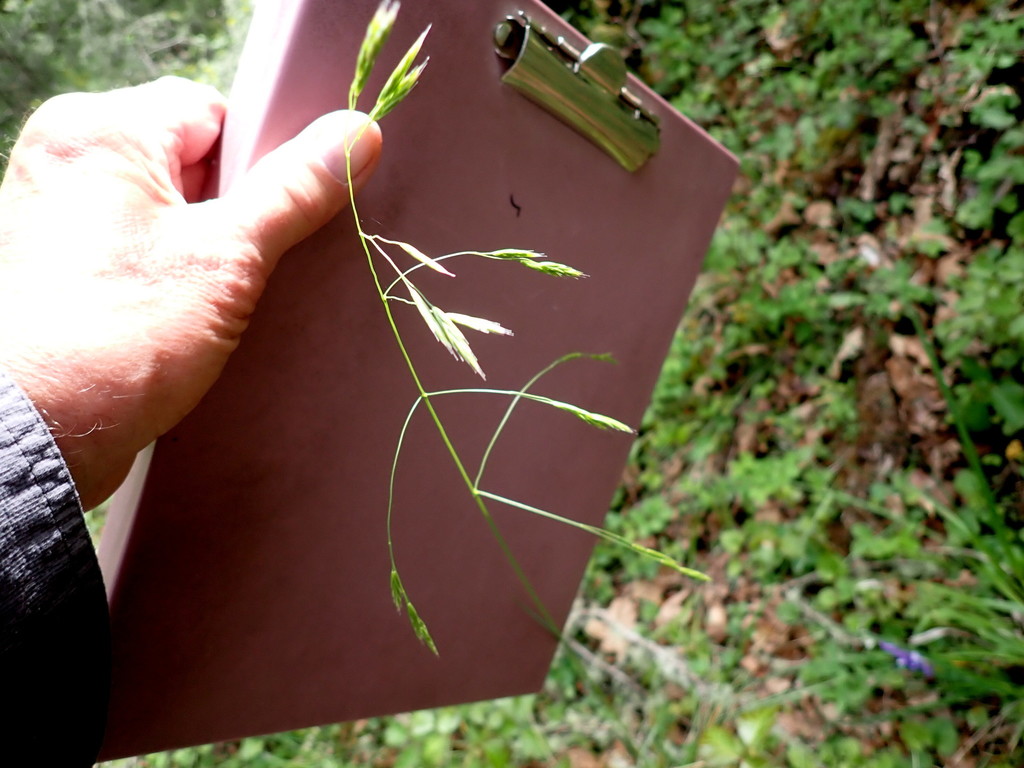
California Fescue
Festuca californica
part shade, full shade
low
well-drained; tolerates clay and dry shade
2–3ft tall, 2–3ft wide
May-Jun · green
Evergreen
Resistant
Friendly
California Coast Ranges and Sierra foothills
Airy open panicles of flowers above blue-green foliage
Outstanding blue-green color; one of the best grasses for dry shade
Planting
Plant California fescue in full sun or part shade in loamy or clay soil with good drainage - it will struggle in sandy soils. Space plants about 3 feet apart since they spread outward to that width. Plant in fall or winter to establish before summer heat. Avoid planting in pure sand; if your soil is sandy, amend it with compost or clay before planting.
After Planting
Water weekly during your plant's first summer to establish it, then dramatically cut back - mature plants need only 3 waterings per month in summer. Once established (by year two), let California fescue do its thing with minimal intervention; its rough, narrow leaves are evergreen and require no pruning. The #1 mistake is overwatering an established plant - resist the urge to treat it like a thirsty lawn grass. This is a low-maintenance native that actually prefers neglect to fussing.
California Species of Special Concern, habitat fragmentation and loss
Birds
Primary winter food source, Dec-Feb
Critical fall migration staging fuel, Sep-Nov
Dense cover for nesting and roosting habitat
Winter forage in grassland habitats
Year-round resident, seeds supplement breeding season diet
Nesting season cover and perching substrate, Apr-Jun
Mammals
Fall seed cache accumulation, Sep-Nov
Year-round food source, seeds cached for winter
3921 E Bayshore Rd (Foothills Nature Preserve), Palo Alto
Online orders only ($50 min); pickup daily 8am-sunset
