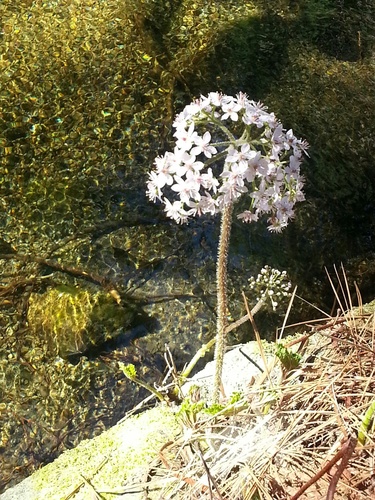
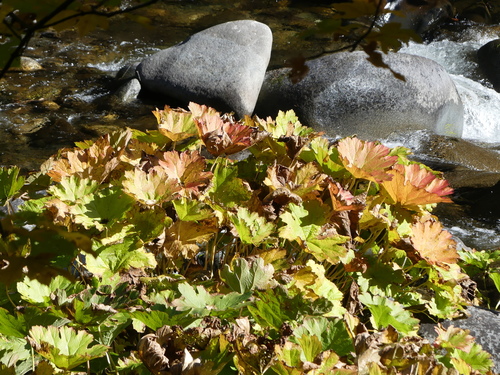
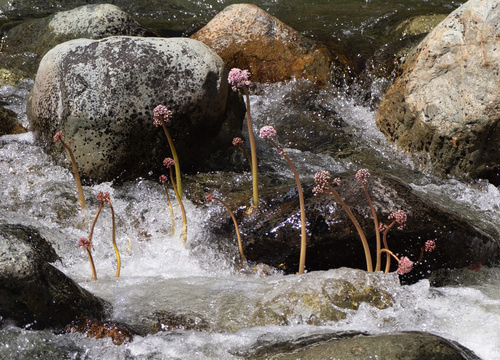
Indian Rhubarb
Darmera peltata
Care
part shade
high
Standing; Adaptable.
2–7ft tall , 2–3ft wide
Mar-Nov
Deciduous
Resistant
Corms eaten raw or cooked; traditionally used by Indigenous peoples
Montane riparian areas and seeps of the Sierra Nevada and Cascade Range from Butte to Kern counties, 2000-7000 ft elevation.
Care Guide
Planting
Plant Indian Rhubarb in partial shade in a spot that stays consistently moist - ideally near a pond margin or in a bog garden where it can access standing water. The plant is adaptable to different soil types as long as drainage allows for wet conditions; avoid dry locations. Space plants to allow room for the slowly-spreading rhizomes to expand into an umbrella-like clump. Plant in spring or fall for best establishment.
After Planting
Keep the soil moist throughout summer; this is not a drought-tolerant plant and will suffer in hot, dry conditions. Indian Rhubarb is deciduous and will die back in winter, which is normal - no pruning is needed beyond removing dead foliage as it appears. The plant is cold-hardy to 5–10°F, so Bay Area winters won't harm it, but it dislikes heat; afternoon shade or proximity to water helps in warmer microclimates. The biggest mistake is planting it in dry soil or full sun; this plant demands consistent moisture to thrive.
Endangered & Threatened Species Supported
Listed under federal ESA and CESA; Highly threatened species with very limited range
California Species of Special Concern; Declining due to disease and habitat loss
Pacific shrew is a Species of Special Concern
Wildlife Supported
Amphibians

Wetland habitat component providing cover and insect prey aggregation zones

Shade and moisture retention in wetland habitat; protective cover structure
Birds

Nesting season habitat in riparian wetland margins and meadows

Spring and fall migration staging in wetland margins; insects on vegetation

Spring arrival period - insects aggregating on emerging foliage
Mammals

Early season browse on emerging leaves and petioles

Spring green-up forage in riparian meadows and wetland margins

Spring to early summer herbaceous forage in riparian wetland habitat

Shelter and invertebrate habitat in dense leaf litter and basal vegetation