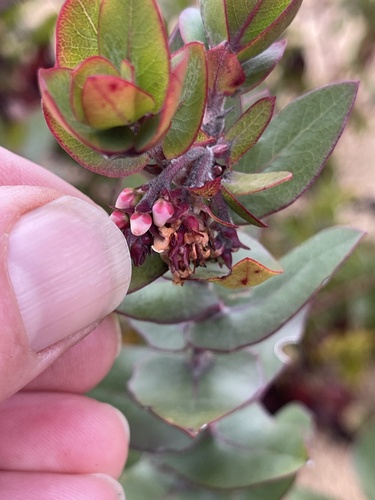
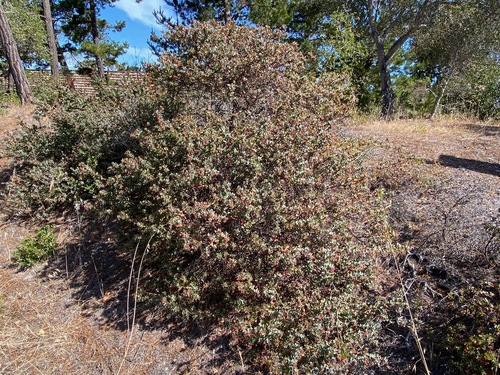
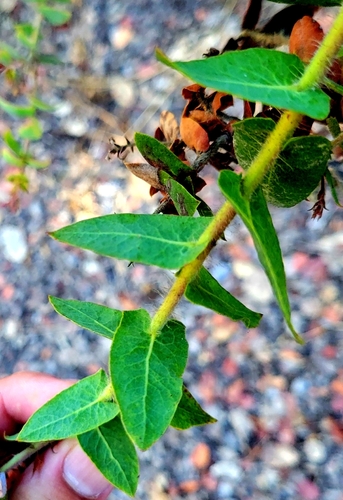
Paradise Manzanita
Arctostaphylos pajaroensis 'Paradise'
Care
full sun, part shade
very low
Fast; Tolerates clay soil but performs best and lives longest in well drained soil.
3–15ft tall , 10–10ft wide
Jan-Dec
Evergreen
Resistant
Prized
Berries eaten fresh or made into cider; traditional Indigenous use
Supports up to 68 butterfly and moth species in Mediterranean California
Chaparral in the Pajaro Range and surrounding areas of Monterey and Santa Cruz counties, 1000-2500 ft elevation
Care Guide
Planting
Plant Paradise Manzanita in full sun to part shade in a location with fast-draining soil - this is non-negotiable for long-term survival, even though it tolerates clay. If your soil is heavy or tends to stay wet, amend it heavily or plant on a slope. The best time to plant is fall or early winter when the plant is dormant. Space it according to your goal: closer together if you want a hedge, or 3–5 feet apart if you're letting it mound naturally to its full 3–15 foot height.
After Planting
Water weekly through the first summer to establish a deep root system, then taper to once or twice a month during summer once established. After the first year, this is an extremely low-water plant that needs almost no supplemental irrigation in the Bay Area. You can prune Paradise Manzanita to ground cover height or let it grow as a shrub; prune after flowering (late winter/spring). The #1 mistake is overwatering - manzanitas are drought-adapted and will rot in consistently moist soil, so err on the dry side once established.
Visit Calscape for more information about Paradise Manzanita
Endangered & Threatened Species Supported
Brush rabbit is a Species of Special Concern
Wildlife Supported
Mammals

Evergreen shelter and forage throughout year

Winter browse during harsh conditions when other forage scarce
Birds

Fall and winter seed consumption as supplemental food source

Winter roosting and shelter in dense evergreen branches

Spring nesting season; dense manzanita provides protected nest sites
Insects

Early spring forager when queens emerge from overwintering