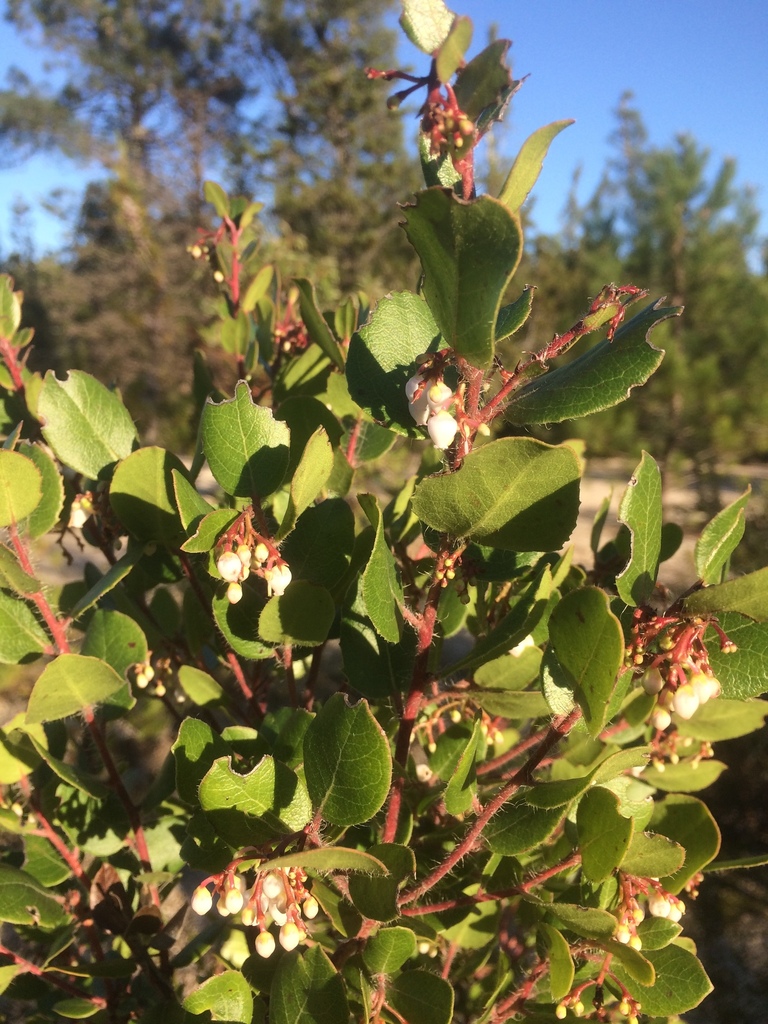
Shatterberry
Arctostaphylos nummularia
Care
part shade, full sun
moderate
Medium; Deep, high organic content, acidic woodland soil.
5–16ft tall , 5–15ft wide
Jan-Dec
Evergreen
Resistant
Prized
Berries eaten fresh or made into cider; traditional Indigenous use
Supports up to 68 butterfly and moth species in Mediterranean California
Chaparral in the Diablo Range of Alameda, San Mateo, and Santa Clara counties, 1000-2500 ft elevation
Care Guide
Planting
Plant your Shatterberry in full sun to part shade in well-draining, acidic woodland soil with deep organic content - think the kind of soil you'd find under native Bay Area oaks and redwoods. Space it where it has room to reach 5 to 16 feet tall and wide depending on the subspecies. The best planting window is fall through early spring, which gives the plant time to establish before summer heat. Make sure drainage is excellent; poor drainage is often where these plants struggle in gardens.
After Planting
Water moderately during the first growing season and into the following summer, then transition to once a month or less once established - these are drought-tolerant natives and actually prefer drier conditions after year one. Shatterberry tolerates cold down to 30°F, so it's well-suited to the Bay Area. The biggest mistake people make is overwatering once the plant is established; resist the urge to water frequently in summer, as that invites root problems. Pruning details aren't specified in the available data, so consult a local native plant nursery if you need guidance on shaping.
Endangered & Threatened Species Supported
California Species of Special Concern; population fluctuations noted
Brush rabbit is a Species of Special Concern
Wildlife Supported
Insects
Host plant for caterpillar development in spring emergence
Forages on Arctostaphylos flowers when available; important early season pollen source
Spring foraging resource for colony establishment and queen nutrition
Evergreen foliage provides year-round browse for herbivorous arthropods
Mammals
Winter browse when other forage is scarce; Arctostaphylos species important winter food
Evergreen shrub provides cover and year-round browse in chaparral habitat
Birds
Seeds and berries consumed in fall; important autumn food source in chaparral