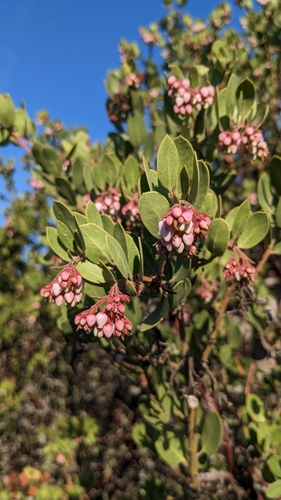
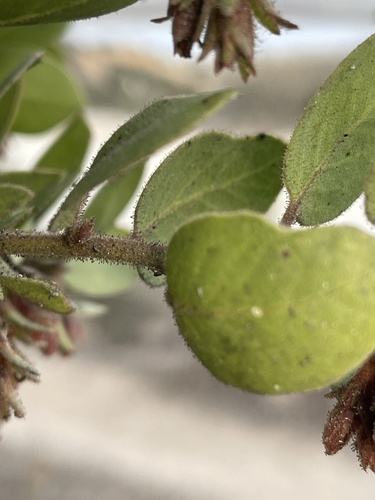
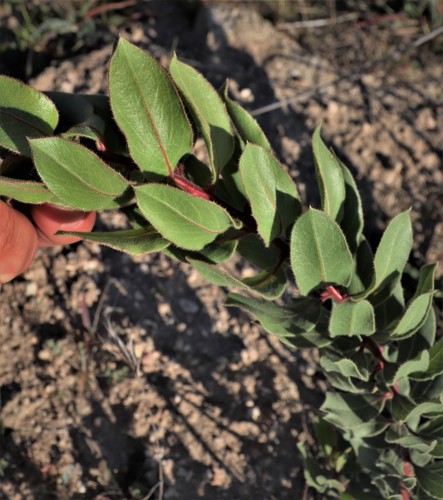
Toro Manzanita
Arctostaphylos montereyensis
Care
full sun, part shade
very low
Fast
3–7ft tall
Jan-Dec
Evergreen
Resistant
Prized
Berries eaten fresh or made into cider; traditional Indigenous use
Supports up to 68 butterfly and moth species in Mediterranean California
Chaparral in the Toro Range and surrounding areas of Monterey County, 1500-3000 ft elevation
Care Guide
Planting
Plant your Toro Manzanita in full sun with fast-draining soil - it comes from sandy chaparral and won't tolerate wet feet. Space it according to its mature size of 3 to 7 feet tall, allowing room for air circulation. The best planting window is fall through early spring when the plant can establish roots before summer heat.
After Planting
Water weekly during your first summer to help the plant establish, then transition to very low water by fall - this is a drought-adapted native that needs minimal supplemental water once established. Prune lightly after flowering to maintain shape, but avoid cutting into old wood where new growth won't emerge. The #1 mistake Bay Area gardeners make is overwatering: treat it like the maritime chaparral plant it is, not like a thirsty ornamental, and you'll have a tough, handsome shrub that supports local butterflies and moths for years.
Endangered & Threatened Species Supported
Brush rabbit is a Species of Special Concern
California Species of Special Concern
Wildlife Supported
Birds

Forages on mature manzanita berries; important seed dispersal agent Sep-Nov

Uses dense manzanita thickets for nesting sites Mar-Jul
Insects

Specialized host-specific aphid; populations peak in spring and early summer

Fungal disease agent affecting leaf tissue; more prevalent in wet winters

Causes crown and root rot; most damaging in poorly drained winter conditions
Pathogenic oomycete; affects plant vigor during rainy seasons
Oomycete pathogen; particularly active during cool, wet soil conditions
Mammals

Browse leaves and new growth year-round; critical winter food source in coastal California

Uses dense manzanita thickets for cover and nesting sites