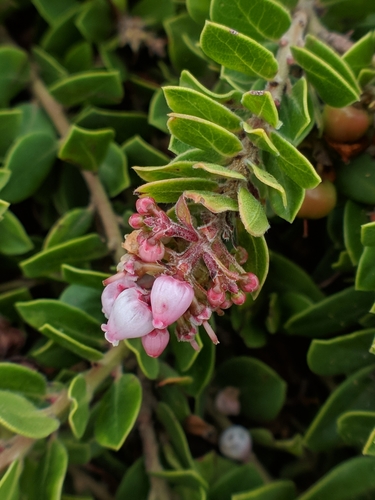
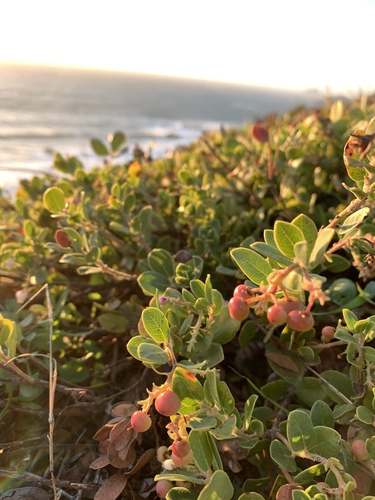
Bert Johnson Manzanita
Arctostaphylos edmundsii 'Bert Johnson'
Care
part shade, full sun
very low
Fast, Medium, Slow; Normally prefers sandy soil but tolerates clay.
0–4ft tall , 3–12ft wide
Jan-Dec
Evergreen
Resistant
Friendly
Prized
Berries eaten fresh or made into cider; traditional Indigenous use
Supports up to 68 butterfly and moth species in Mediterranean California
Chaparral in Alameda and Contra Costa counties, particularly around the inner Coast Ranges, below 2000 ft elevation
Care Guide
Planting
Plant Bert Johnson Manzanita in full sun or part afternoon shade in a location with fast-draining soil - it thrives in sandy soil but will tolerate clay as long as water doesn't sit. Space plants to account for mature spread, which can reach 4 feet. The best planting season in the Bay Area is fall through early spring so roots can establish before summer heat. Avoid planting near direct salt spray if you're in a coastal location.
After Planting
Water weekly for the first summer, then taper to no more than twice monthly once established - this is a very low water plant and overwatering is the main killer. After the first year, you can rely almost entirely on rainfall except during extended dry spells. The plant is evergreen and blooms winter through spring with minimal pruning needed; light shaping after flowering will maintain its mounded form. Expect slow, steady growth in year one; this is normal and the plant will fill in over time.
Visit Calscape for more information about Bert Johnson Manzanita
Endangered & Threatened Species Supported
Brush rabbit is a Species of Special Concern
Wildlife Supported
Insects

Specialist host plant obligate

Early season nectar source for colony establishment

Larval host plant for manzanita-associated Lepidoptera species

Early spring bloom resource for hive nutrition

Spring population outbreak on new growth
Birds

Early season breeding territory nectar source

Dense cover for brood-rearing and winter roosting

Arrival and breeding season nectar resource

Nesting habitat in dense manzanita patches
Mammals

Year-round browse and cover habitat

Browsed foliage; drought season emergency forage