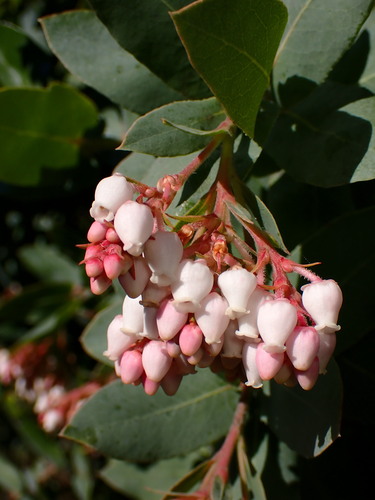
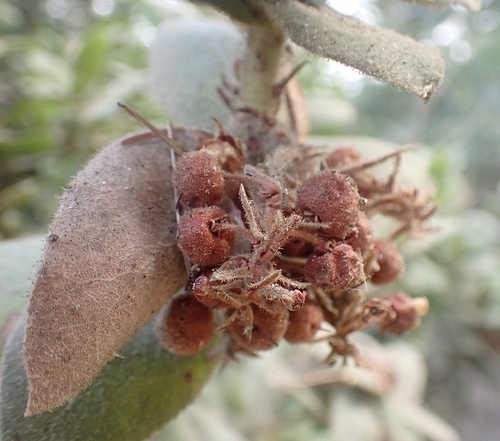
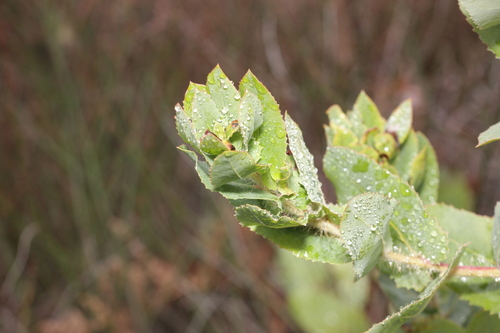
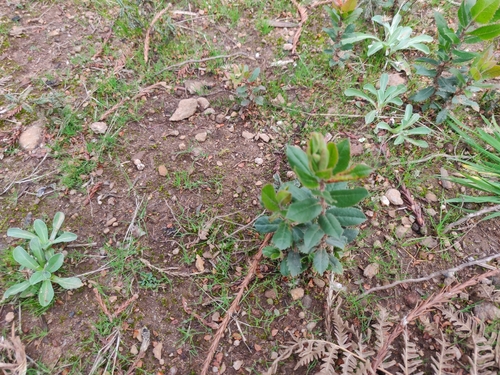
Santa Cruz Manzanita
Arctostaphylos andersonii
Care
full sun, part shade
very low
7–16ft tall
Jan-Dec
Evergreen
Resistant
Prized
Berries eaten fresh or made into cider; traditional Indigenous use
Supports up to 68 butterfly and moth species in Mediterranean California
Chaparral and coastal scrub in the Santa Cruz Mountains and surrounding areas of Santa Cruz and San Mateo counties, below 2000 ft elevation
Care Guide
Planting
Plant Santa Cruz Manzanita in full sun in a location with excellent drainage - this endangered species naturally grows in open forest clearings and chaparral, so it won't tolerate wet feet. Space plants according to their mature size of 7–16 feet tall. Plant in fall or winter to establish before the summer dry season.
After Planting
Water deeply but infrequently during the first growing season to establish roots, then transition to very low water once established - this is a drought-adapted native that needs minimal supplemental water. The plant flowers February through May and is evergreen year-round. The #1 mistake is overwatering: this species evolved in dry, open places and will fail in poorly draining soil or with frequent irrigation.
Visit Calscape for more information about Santa Cruz Manzanita
Endangered & Threatened Species Supported
California Species of Special Concern, habitat fragmentation and loss
Brush rabbit is a Species of Special Concern
California Species of Special Concern
Wildlife Supported
Birds

Year-round resident using dense manzanita for nesting and cover in chaparral and scrub habitat

Dense manzanita growth provides essential cover and nesting habitat in coastal sage scrub communities

Seeds available late summer through fall; important post-breeding food source for coveys

May breed in cavities within or near manzanita scrub habitat; uses surrounding airspace for insect foraging
Insects

Host-specific aphid species dependent on Santa Cruz manzanita foliage; colonies present through growing season
Mammals

Winter and drought season browse when preferred foliage scarce; evergreen foliage provides emergency food source

Year-round forage in coastal scrub habitat; uses dense manzanita growth for shelter and food

Uses manzanita foliage in construction and lining of nests; year-round dietary component in coastal scrub