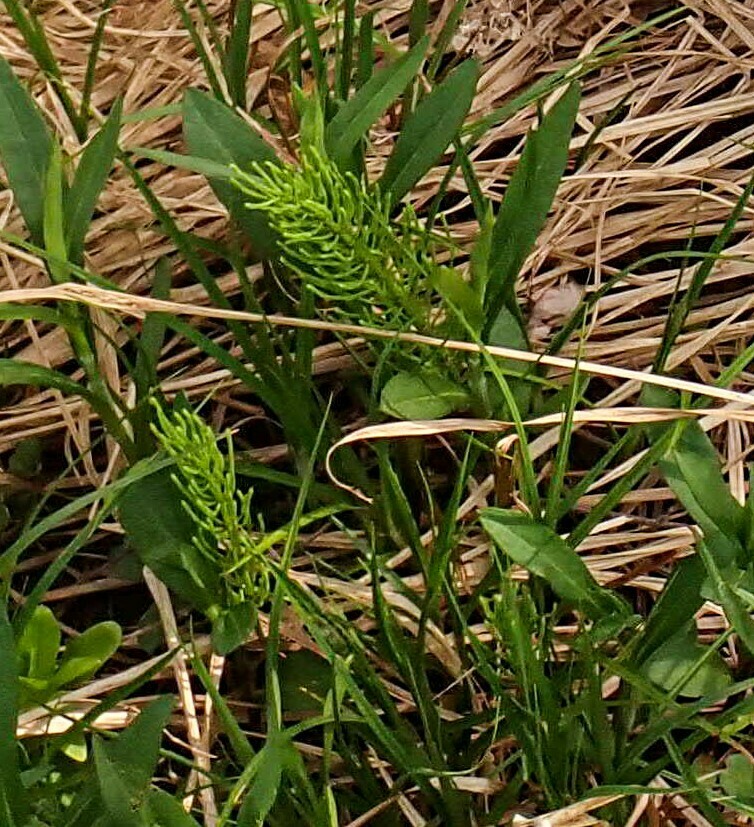
Common Horsetail
Equisetum arvense
Care
part shade
moderate
Adaptable, tolerant of sand, loam and clay.
0–2ft tall
Mar-May
Friendly
Young fertile shoots boiled and eaten like asparagus; traditionally harvested
Widespread throughout California in moist areas, meadows, and wetlands, sea level to 8000 ft elevation.
Care Guide
Planting
Plant Common Horsetail in part shade in a location that stays consistently moist or near water features - this plant thrives in wet habitats and won't tolerate dry conditions. It's adaptable to sand, loam, and clay soils, so soil type is flexible as long as drainage keeps the area wet rather than dry. Spring is the ideal planting time, which aligns with when the plant's fertile stems emerge. Space plants with their rhizomatous spreading habit in mind, as these plants can spread aggressively underground.
After Planting
Water consistently to keep soil moist throughout the growing season and into dormancy; this is not a plant to let dry out between waterings. Expect fertile stems in spring (March–May) followed by taller, bushier sterile stems as the season progresses, reaching up to 2 feet tall. The #1 mistake is planting Common Horsetail in regular garden beds expecting it to behave like other perennials - it's specialized for wet habitats and will either struggle in typical garden moisture or escape its boundaries through underground rhizomes if not contained.
Endangered & Threatened Species Supported
State threatened species in California
Wildlife Supported
Insects
Larval host plant; larvae skeletonize and consume foliage May-July
Specialist feeder on Equisetum; adults and larvae consume plant tissue
Sap-feeding; populations peak on new growth during growing season
Mammals
Winter and early spring browse; preferred during snow cover when other forage scarce
Primary winter browse when other vegetation unavailable; spring shoots consumed when emerging
Early spring green shoots consumed during post-hibernation foraging
Winter survival food; spring shoots during green-up period
Birds
Winter foraging; opportunistic consumption during food scarcity
Aquatic habitats; forages on horsetail in shallow water year-round
Year-round availability in wetland habitats; important early spring food
Migration staging areas; spring and fall consumption in wetland habitats