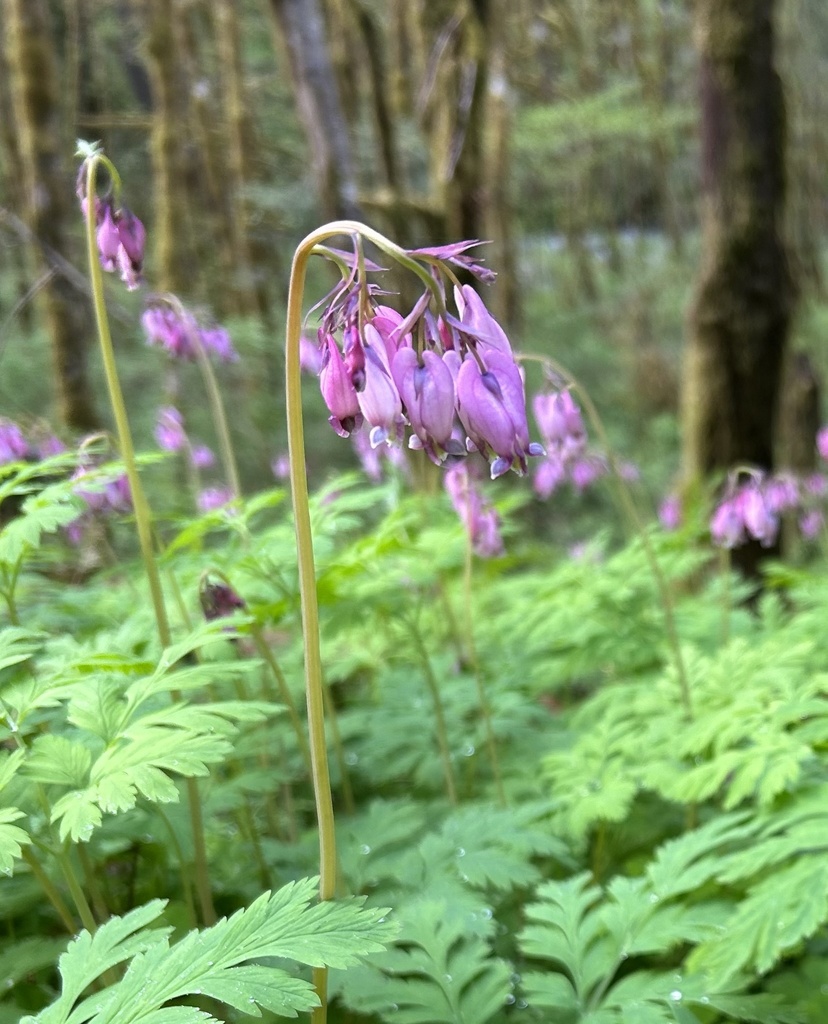
Bleeding-heart

Dicentra formosa

perennial herbView on Calscape
Care
Sun

full sun, part shade

Water

moderate

Soil

Medium; Prefers rich, well drained soil.

Size

1–2ft tall, 3–3ft wide

Bloom

Mar-Aug

Foliage

Deciduous

Deer

Resistant

Container

Friendly

Flowers

Prized

Native Range

Coastal Ranges and Sierra Nevada from the Oregon border south to Kern County, typically between 1000-6000 ft elevation in moist woodland and shade.

Care Guide

Planting

Plant your bleeding heart in spring or fall in a spot with part shade (especially important in the Bay Area's warmer microclimates, though it can handle more sun in cooler areas). It needs rich, well-drained soil with medium drainage - amend heavy clay with compost before planting. Space plants about 12-18 inches apart since they'll spread via underground roots and self-seeding. This is a woodland plant at heart, so it thrives in moist, shady garden spots and makes an excellent groundcover.

After Planting

Water moderately and consistently through your first summer - aim for about 2-3 times per month once the plant is established. Expect your bleeding heart to flower in spring, then go dormant and disappear entirely during summer heat; this is normal, not dead. It may re-emerge and flower again in fall. The #1 mistake is overwatering during dormancy or panicking when the plant vanishes - resist the urge to dig it up or add water. Let it rest, and it will return.

Visit Calscape for more information about Bleeding-heart

Endangered & Threatened Species Supported
Clodius parnassian butterflyParnassius clodius

Listed as Endangered under CESA

CA: Endangered
Wildlife Supported

Insects

Nectar · Spring

Spring pollinator of Dicentra flowers

Larval Host · Spring

Larvae feed on Dicentra formosa leaves in spring; single generation per year

Nectar · Spring

Spring forager; visits flowers during bloom period

Nectar · Spring

Early spring forager in coastal and montane regions of California

Nectar · Spring

Spring pollinator, particularly important in northern California woodlands

Nectar · Spring

Mountain and foothill populations forage on spring ephemeral flowers

Larval Host · Spring

Caterpillar food plant in spring months

Larval Host · Spring

Occasional larval host plant; caterpillars feed on foliage

+2 more species

Where to Buy
East Bay Wilds

2110 Eighth St, Suite 202, Berkeley

Fri 9:30am-4pm (occasional Sat, call ahead)

1.5 mi(510) 409-5858WebsiteDirections
Native Here Nursery

101 Golf Course Dr, Tilden Regional Park, Berkeley

Sat 10am-2pm

3.0 mi(510) 549-0211WebsiteDirections
Grassroots Ecology

3921 E Bayshore Rd (Foothills Nature Preserve), Palo Alto

Online orders only ($50 min); pickup daily 8am-sunset