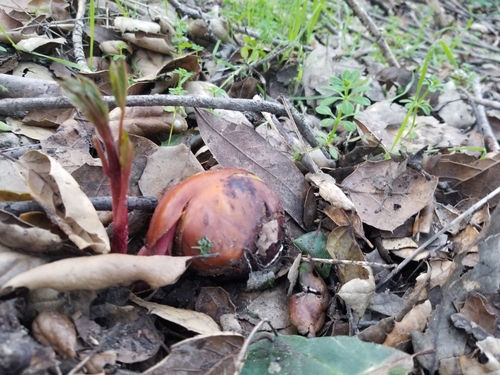
California Buckeye
Aesculus californica
Care
full sun, part shade
very low
well-drained, tolerates clay
15–40ft tall , 15–40ft wide
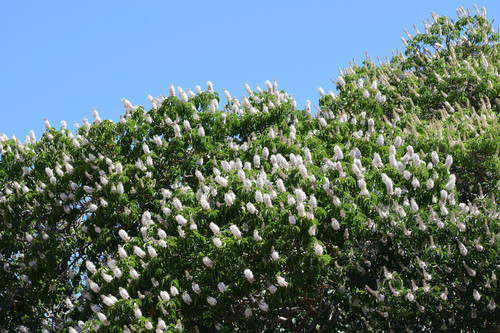
May-Jun · white, pink
Deciduous
Resistant
Prized
Endemic to California foothills and canyons
Showy upright candelabra-like flower clusters
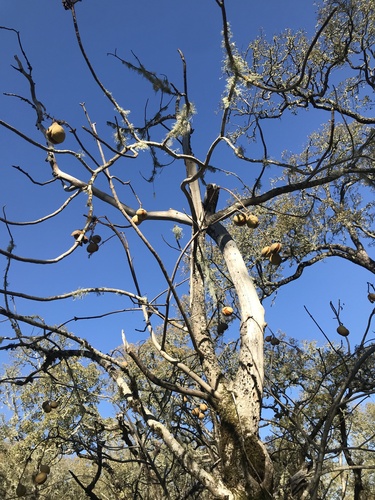
Summer deciduous; all parts toxic to honeybees; spectacular spring bloom
Care Guide
Planting
Plant your California Buckeye in full sun or part shade in fall or winter when the plant is dormant. It tolerates a wide variety of soils - including clay and serpentine - but prefers well-drained soil; if your drainage is slow, amend with compost before planting. Space it generously, as this multi-trunked shrub or small tree can spread 15–40 feet, making it suitable for dry slopes or as a hedge.
After Planting
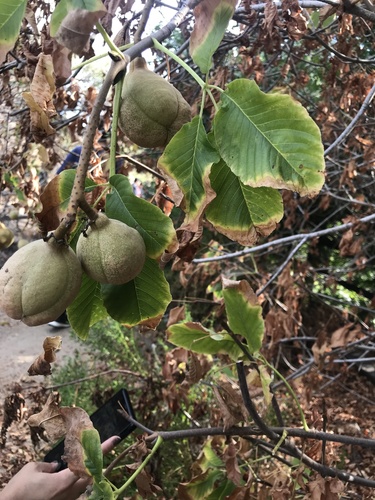
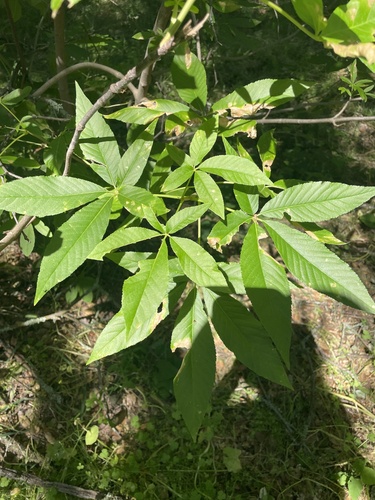
Water weekly during your first summer, then transition to minimal supplemental watering once established - mature plants need watering just twice monthly or less in summer. Expect the plant to leaf out in early spring with pale pink or creamy-white flowers by May-June, then drop all its leaves in fall (this is normal, not a sign of trouble). Watch for leaf damage during spring freezes or intense summer heat, and be aware that all parts of the large round fruits that appear in late summer are toxic, so keep them away from children and pets.
Visit Calscape for more information about California Buckeye
Endangered & Threatened Species Supported
Western gray squirrel listed as Threatened under CESA; Species of Special Concern
California Species of Special Concern; monarch populations declining
Wildlife Supported
Birds

Early spring nectar source during breeding season establishment, May-Jun bloom

Spring nectar during territorial establishment and courtship, May-Jun

Late summer seed consumption post-breeding

Spring migration diet, gleaning insects from foliage
Insects

Spring colony establishment and food collection, May-Jun bloom

Important spring pollen and nectar source for colony buildup, May-Jun

Spring migration nectar source, May-Jun bloom provides critical fuel

Spring flight period nectar foraging, May-Jun

Spring generation nectar source

Spring generation nectar foraging

Spring flight period nectar source

Spring migration and breeding nectar source
+1 more species
Mammals

Critical fall seed harvest and caching for winter storage

Fall seed consumption and caching behavior