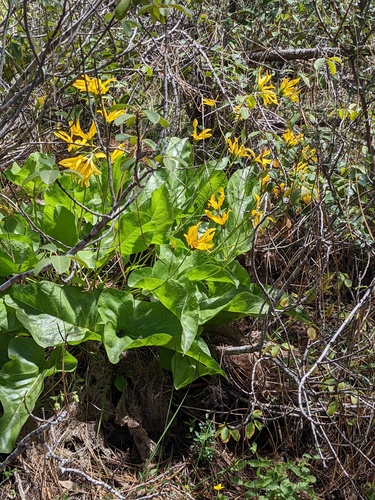
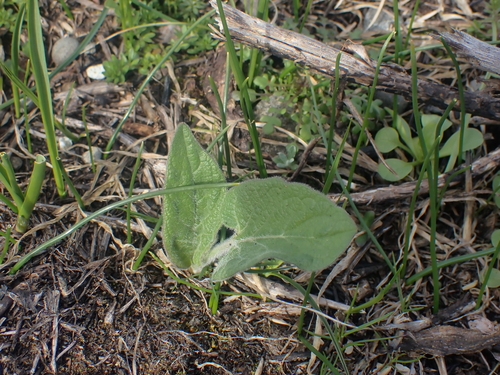
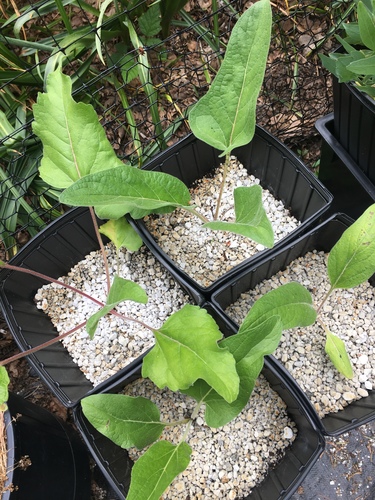
Puget Balsamroot
Balsamorhiza deltoidea
Care
full sun, part shade
3–3ft tall
Resistant
Friendly
Prized
Seeds eaten raw; roots eaten cooked; traditional Indigenous food
North Coast and Cascade-Sierra region from Trinity County to Lassen County, 2000-5000 ft elevation, in oak woodlands and conifer forests, extending to Oregon
Care Guide
Planting
Plant your Puget Balsamroot in full sun, where it will thrive in its native mountain habitat conditions. This perennial has a deep taproot, so choose a location where you can plant it and let it establish without disturbance. Space it about 3 feet apart to accommodate its mature height. Plant in fall or early spring to give the root system time to develop before summer stress.
After Planting
Water weekly during your plant's first summer to help establish that deep taproot system, then gradually reduce watering as it matures and becomes more drought-tolerant. The biggest mistake people make is overwatering once the plant is established - this species evolved in dry mountain regions and prefers lean conditions. Expect the plant to die back in winter as a dormant perennial; this is normal. Avoid fertilizing, as the plant thrives in poor to average soil without added nutrients.
Endangered & Threatened Species Supported
Federal threatened status; state endangered; found in Willamette Valley Oregon and SW Washington
Wildlife Supported
Insects

Larval host plant for caterpillars

Early spring forager, queen establishment diet

Spring and early summer bloom visitor

Early season nectar source for colony establishment

Host plant for caterpillars in spring

Spring bloom visitation

Opportunistic foliage and flower consumption

Early spring forage when native flowers emerge
+4 more species