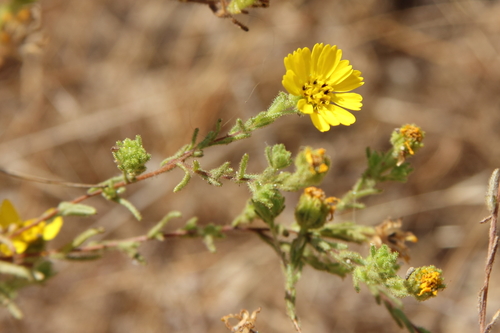
Coastal Moonshine
Deinandra corymbosa
Care
full sun
low
3–3ft tall
Mar-Nov
Friendly
Prized
Coastal bluffs and scrub from Monterey County to Santa Barbara County, below 1500 ft elevation
Care Guide
Planting
Plant Coastal Moonshine in full sun - this is non-negotiable for this species. The data doesn't specify soil requirements, but since it's native to coastal scrub and grassy places in the Coast Ranges, well-draining soil is your safest bet. Plant in spring to give it time to establish before summer. Space plants about 3 feet apart, since they grow to 3 feet tall and wide.
After Planting
Water moderately during the first growing season to help establishment, then transition to low water once the plant is settled - it's adapted to the dry California landscape and won't need much after year one. Coastal Moonshine blooms from March through November, so you'll have flowers for most of the year with minimal fussing. The biggest mistake is overwatering; this plant is built for drought, so err on the side of dry rather than wet.
Endangered & Threatened Species Supported
California Species of Special Concern; monarch populations declining
Wildlife Supported
Insects

Critical nectar source during fall migration staging (Aug-Oct)

Adult foraging on composite flowers mid to late summer

Feeds on developing seeds in late summer through fall

Forages on composite flower heads during peak bloom
Birds

Extracts seeds from mature flower heads in fall and early winter

Winter resident foraging on seed heads September through March

Winter foraging on dried seed heads in open grasslands
Mammals

Grazes on spring growth during breeding season