Lemonade Berry
Rhus integrifolia
Care
full sun, part shade
very low
well-drained; tolerates clay; salt tolerant
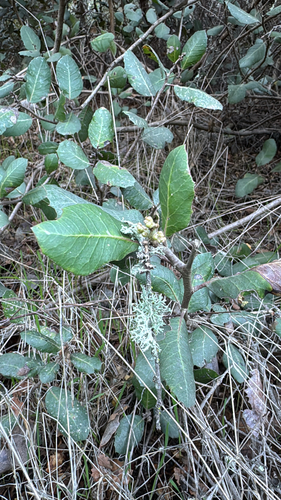
5–15ft tall , 5–15ft wide
Feb-May · pink, white
Evergreen
Resistant
Prized
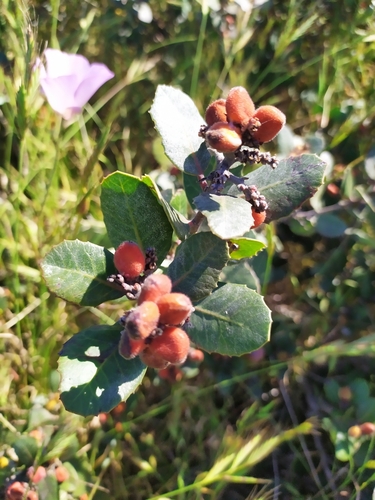
Berries made into traditional lemonade-like beverage
Coastal Southern California and Baja California
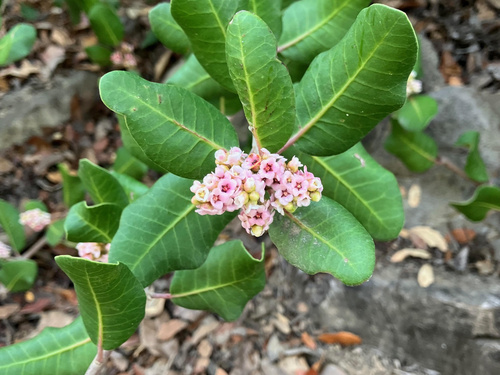
Dense clusters of small pink to white flowers
Tart berries can make lemonade-like drink; excellent coastal screen
Care Guide
Planting
Plant your lemonade berry in full sun or part shade in well-draining soil - it tolerates many soil types, including clay, so drainage is more important than soil type. Plant in fall or winter for best establishment. Space according to your final size goal: this plant grows slowly at first, then fast to 10-15 feet tall in the Bay Area, with a sprawling form, so give it room or plan to prune. Choose a spot on a slope or area where it won't need summer water once established.
After Planting
Water regularly during your first growing season to establish deep roots, then dramatically reduce watering - once established, lemonade berry needs only very low water and can thrive with no supplemental summer irrigation beyond 2 waterings per month. Year one will look slow; the real growth kick happens in year two and beyond. Prune or shear anytime of year to control its sprawling form or shape it as a hedge. The #1 mistake is overwatering: this plant becomes nearly indestructible once established precisely because it's adapted to drought, so less water means a healthier plant.
Endangered & Threatened Species Supported
California Species of Special Concern; monarch populations declining
Wildlife Supported
Birds

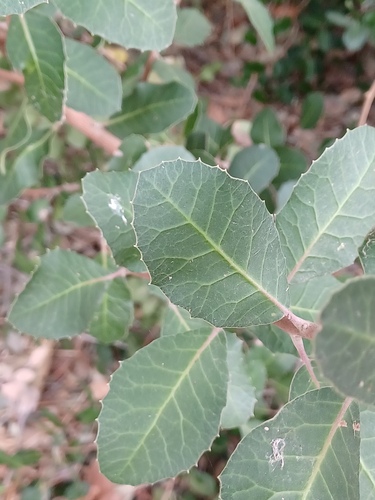
Dense evergreen foliage provides year-round nesting and cover habitat
Berries ripening summer-fall; critical supplement during breeding and migration
Insects

Spring bloom visitation Feb-May

Spring foraging during Feb-May bloom

Primary nectar source Feb-May during bloom season

Early spring foraging Feb-May

Pollen source during spring foraging Feb-May

Larval host plant; caterpillars feed on foliage spring-early summer

Spring nectar foraging during bloom period

Larval host; leaf-feeding caterpillar stage
+3 more species
Mammals

Summer-fall seed maturation and consumption