← Back to results

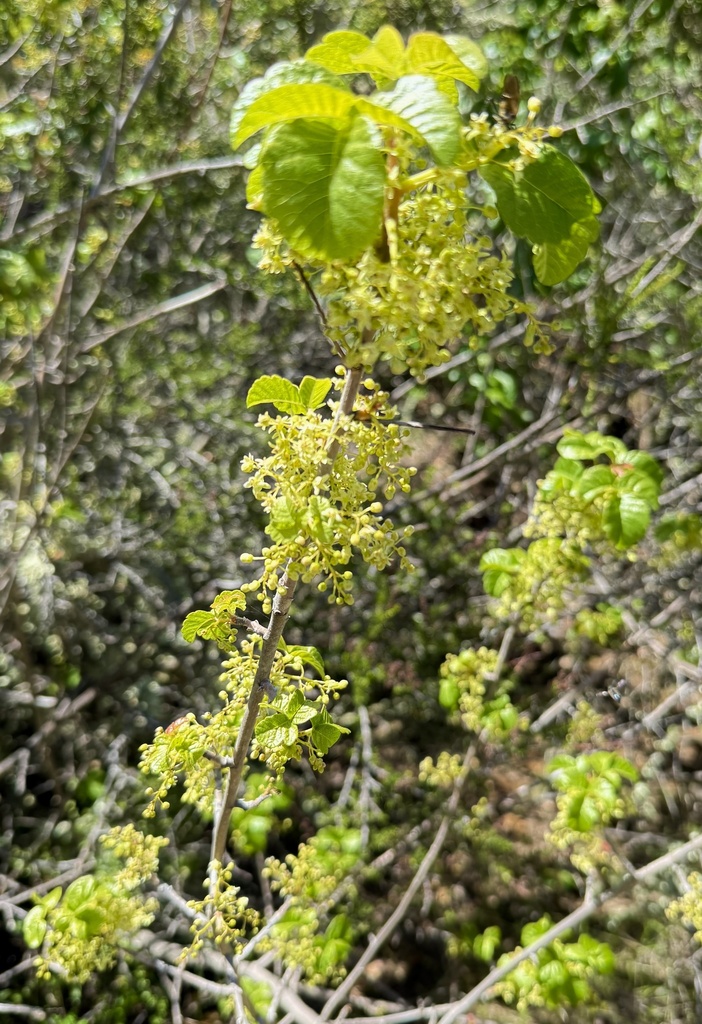
Pacific Poison Oak

Toxicodendron diversilobum

Care

Sun

full sun, part shade

Water

low

Soil

Fast, Medium, Slow; Adaptable.

Size

2–13ft tall , 13–13ft wide

Bloom

Mar-May

Foliage

Deciduous

Deer

Resistant

Container

Friendly

Native Range

Chaparral, oak woodland, and coastal sage scrub throughout California, from coastal bluffs to 5000 ft elevation

Care Guide

Planting

Plant Pacific poison oak in fall or winter when the plant is dormant, choosing a location with full sun to part shade - it's extremely adaptable and will grow as a dense shrub in sun or a vine-like form in shade. This native thrives in any soil type with fast, medium, or slow drainage, so your existing Bay Area soil likely works fine. Give it room to spread, as it can reach 2 to 13 feet depending on light conditions and will expand via underground rhizomes.

After Planting

Water weekly during your first summer to establish the plant, then transition to low water once established - poison oak is drought-tolerant and needs minimal supplemental water in the Bay Area's Mediterranean climate. Expect the plant to go completely leafless and dormant in winter, dropping its leaves after cold weather arrives; this is normal and healthy. The number one mistake is planting it too close to pathways or seating areas - remember that all parts cause severe allergic reactions on contact, so site it carefully in a wildlife garden where you and visitors won't brush against it.

Visit Calscape for more information about Pacific Poison Oak

Endangered & Threatened Species Supported

Western bluebird Sialia mexicana
CA Special Concern

California Species of Special Concern

Wildlife Supported

Birds

Fruit · Fall

Primary fall fruit source; forages on ground beneath shrubs

Fruit · Fall

Fall and winter diet staple; forages beneath shrubs

Fruit · Fall

Critical migration stopover fuel late August-September

Fruit · Fall

Critical fall migration fuel source August-October

Fruit · Year-Round

Year-round resident; consistent food source

Fruit · Winter

Winter resident; year-round foraging resource

Fruit · Fall

Winter resident; important overwintering food source

Fruit · Year-Round

Year-round resident; persistent forager

+2 more species

Insects

Larval Host · Year-Round

Specialist larval host; overwinters on plant

Larval Host · Spring

Larval foodplant; spring and early summer broods

Nectar · Spring

Native bee specialist; spring nesting period

Nectar · Spring

Early spring queen emergence and colony establishment

mod Honey bee
Nectar · Spring

Spring blooms provide early-season forage

Larval Host · Spring

Alternate larval host plant; spring emergence

Mammals

Fruit · Fall

Fall caching behavior; important pre-hibernation food

Fruit · Fall

Where introduced in CA; fall foraging for caching

Where to Buy

Native Here Nursery

101 Golf Course Dr, Tilden Regional Park, Berkeley

Sat 10am-2pm

3.0 mi (510) 549-0211 Website