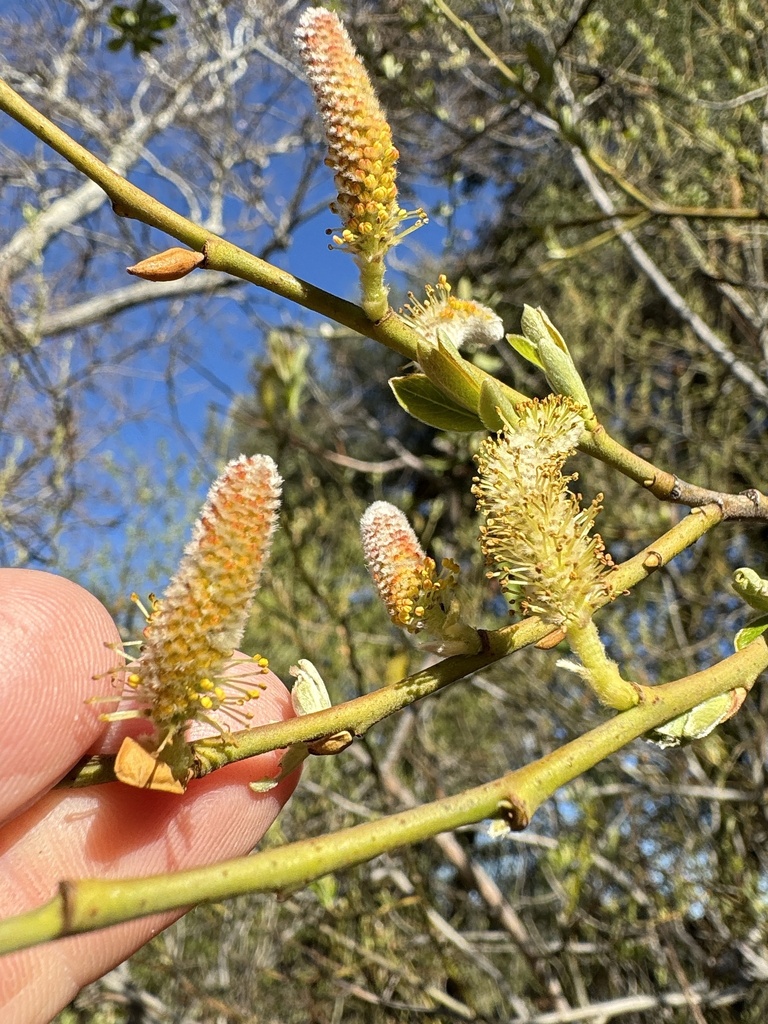
Arroyo Willow
Salix lasiolepis
Care
full sun
high
Slow, Standing; Tolerates a variety of soils as long as adequate drainage is provided.
7–35ft tall , 15–15ft wide
Jan-Dec
Deciduous
Supports up to 328 butterfly and moth species in Mediterranean California
Riparian and wetland areas throughout California, from coastal regions to 6000 ft elevation in the mountains
Care Guide
Planting
Plant your Arroyo Willow in full sun with soil that drains well, even though this plant loves moisture - the key is drainage, not standing water. Space it 5 to 10 feet wide to accommodate its mature spread. It tolerates a variety of soil types, so don't worry too much about soil composition as long as water doesn't pool permanently. Plant in fall or winter when the plant is dormant for best establishment.
After Planting
Keep the soil constantly moist during the first growing season - water weekly throughout summer and don't let it dry out. After year one, you can reduce supplemental watering, though this plant will always prefer consistently moist conditions. Prune or shear in winter to shape it as a hedge or control its size; willows respond well to this and can grow 15 to 30 feet tall if left unpruned. Expect the plant to drop its leaves in winter (it's deciduous), and don't be alarmed by wasp galls on the leaves in spring - they're harmless to the plant. The #1 mistake is planting it in a dry spot: this is a water-loving native that needs moist soil year-round to thrive.
Endangered & Threatened Species Supported
California Species of Special Concern; population fluctuations noted
Wildlife Supported
Insects
Specialized host-specific sawfly; gall-forming on stems and leaves
Caterpillars feed on willow leaves during spring emergence
Early season host plant; caterpillars feed on new foliage
Primary host plant for larval development; multiple broods spring-summer
Caterpillars feed on young willow leaves in spring; single brood
Early season resource for emerging colonies
Early willow growth supports first brood larvae March-April
Early specialist bee using willow catkin pollen
+4 more species
Birds
Nests in willow branches; also gleans insects from foliage
Nests in cavities; forages for insects on foliage year-round
Nests in dense willow growth; forages for insects and buds