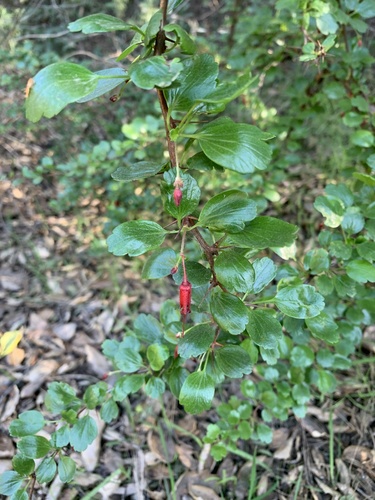
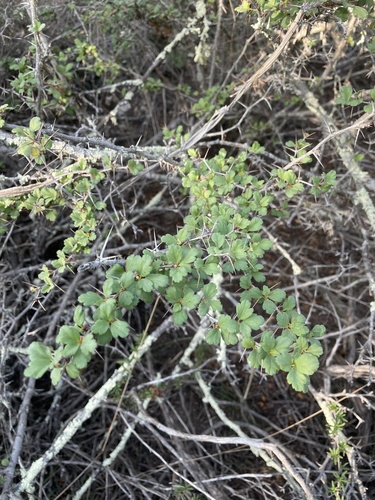
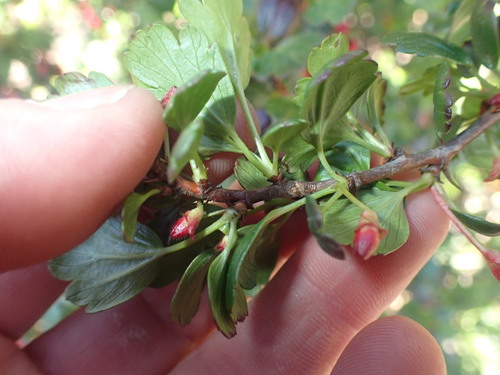
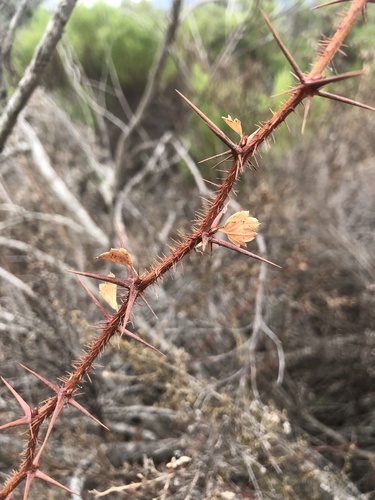
Fuchsia-flowered Gooseberry
Ribes speciosum
Care
part shade
very low
Medium, Slow; All different kinds. Avoid summer water in clay soils. Tolerates serpentine soil..
6–10ft tall , 3–8ft wide
Jan-Dec
Deciduous
Resistant
Friendly
Prized
Berries eaten raw or cooked; tart, seedy fruits used in preserves
Coastal sage scrub and oak woodland from Santa Barbara County to San Diego County, below 2000 ft elevation, extending to Baja California
Care Guide
Planting
Plant your Fuchsia-flowered Gooseberry in part shade, ideally in the shelter of larger trees or shrubs where it naturally thrives. It tolerates a wide range of soil types but prefers medium to slow-draining soil - avoid planting it where summer water will pool around the roots, especially in clay. Site it away from walkways since the thorns are sharp, and position it behind evergreen perennials or low shrubs to hide its bare stems during the leafless months.
After Planting
Water moderately during the first year to establish the plant, then gradually reduce to very low water once established - by the second summer, aim for just one irrigation per month or less. This is a deciduous shrub that drops its leaves in summer, so don't panic when it looks bare; the spectacular fuchsia flowers will return in winter and spring. The biggest mistake Bay Area gardeners make is overwatering, especially in summer; let the plant rest dry during the hot months, and avoid any supplemental water in clay soils.
Visit Calscape for more information about Fuchsia-flowered Gooseberry
Endangered & Threatened Species Supported
Island endemic, critically threatened
California state threatened species
Wildlife Supported
Birds

early spring nectar source during breeding season establishment

fruits consumed during fall migration and winter months
Insects

spring blooms provide early season pollen and nectar

larval host plant for endemic island populations

larval host plant; early season forage for colony establishment
adults feed on developing buds and fruits

caterpillar foliage consumption during spring growth

larval development on plant tissues; early spring emergence

spring blooms provide pollen provisioning for nest construction
larvae develop within fruit tissues, multiple generations