White Sage
Salvia apiana
Care
full sun
very low
well-drained; very drought tolerant; no clay
3–5ft tall , 3–5ft wide
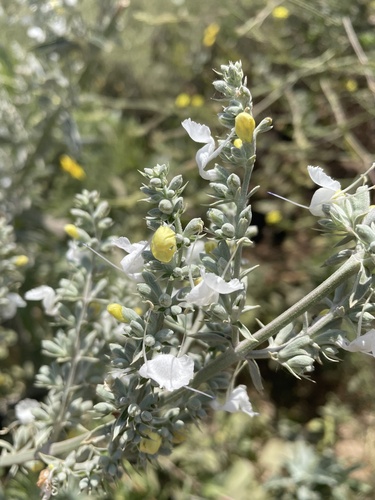
Apr-Jul · white
Evergreen
Resistant
Friendly
Prized
Southern California and Baja California coastal mountains
Tall spikes of white flowers above silvery foliage
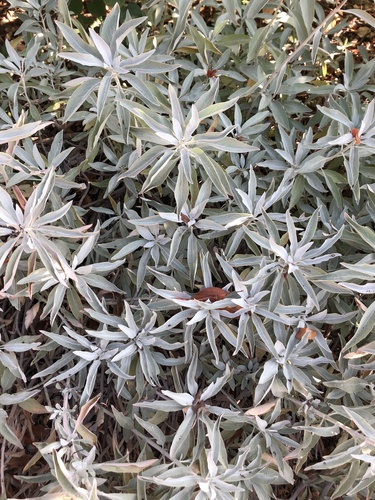
Sacred to indigenous peoples; stunning silvery white foliage
Care Guide
Planting
Plant your White Sage in full sun with well-drained soil - this is non-negotiable. It adapts to various soil types but absolutely cannot tolerate clay or poor drainage, so amend heavy soil with compost or sand before planting. Space plants 3–5 feet apart to accommodate their mature size of 3–5 feet tall. Fall through early spring is the ideal planting window in the Bay Area, giving the plant time to establish roots before summer heat.
After Planting
Water weekly for the first summer to help it establish, then taper off dramatically - by year two, mature plants need water only once a month or less during summer. The #1 mistake people make is overwatering; this plant evolved in an arid climate and will rot if kept consistently moist. Prune in late winter or spring to keep it compact and neat, and expect fragrant white flowers blooming spring through summer once established. This is an evergreen that tolerates Bay Area winters down to 0°F, so it should thrive year-round with minimal fuss.
Endangered & Threatened Species Supported
Listed under California ESA; range has contracted significantly
Wildlife Supported
Insects

Spring and early summer foraging Apr-Jul; native bee specialist

Spring-early summer bloom synchronization Apr-Jul

Apr-Jul bloom season foraging

Spring and summer blooms Apr-Jul; important native pollinator

Apr-Jul foraging; increasingly threatened species

Apr-Jul bloom period; primary pollen and nectar resource

Spring bloom season nectar source

Apr-Jul bloom season foraging
+2 more species
Birds

Primary nectar source during Apr-Jul bloom season; supports breeding and territorial defense

Spring migration and breeding season nectar source Apr-Jul

Early spring blooms (Apr-May) provide critical nectar for breeding season

Seed foraging and shelter year-round in shrub; native range resident

Late summer-fall seed maturation; food source for finch families
Reptiles

Dense evergreen shrub provides shelter and thermoregulation sites year-round