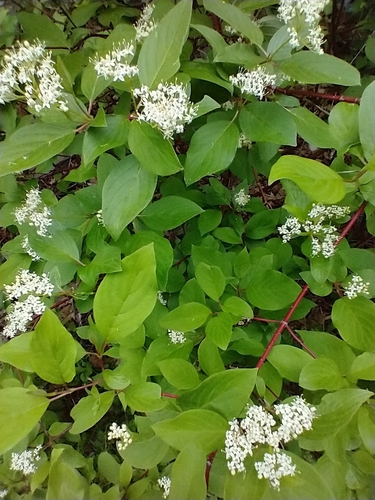
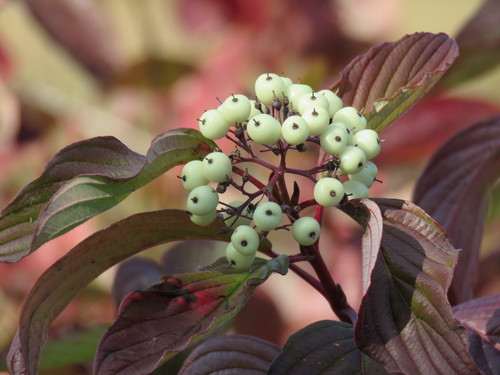
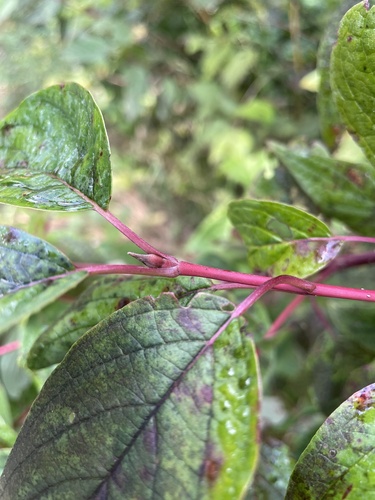
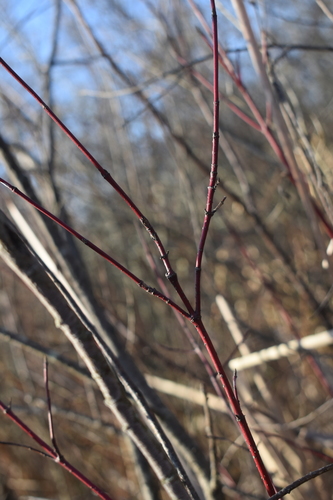
Red-Osier Dogwood*
Cornus sericea subsp. sericea
Care
part shade, full sun
high
Medium, Slow, Standing; Tolerates a variety of soils but does best in moist, rich loamy soil.
4–13ft tall , 9–15ft wide
Jun-Aug
Deciduous
Friendly
Berries eaten raw or cooked. Traditional Indigenous food
Supports up to 58 butterfly and moth species in Mediterranean California
Riparian corridors and wetland margins throughout northern California, Sierra Nevada, and mountains from 1000-6000 ft elevation, extending to Oregon and Washington.
Care Guide
Planting
Plant your Red-Osier Dogwood in partial shade to full sun, ideally in fall or winter when the plant is dormant. This shrub thrives in moist, rich loamy soil and tolerates a range of drainage conditions from medium to slow drainage and even standing water - making it perfect for Bay Area low spots that stay damp. Space plants 3-5 feet apart if planting multiple specimens, as they spread readily by underground stolons. Avoid planting in deep shade, where the distinctive red twigs won't develop their color.
After Planting
Water weekly for the first summer to establish a strong root system, then taper to once weekly or less as the plant matures. This is a low-maintenance shrub that needs minimal pruning - let it grow naturally or trim in late winter to maintain shape or remove dead wood. Year one, you'll see vigorous growth; come fall, expect bright red to purple foliage before the plant goes dormant and drops its leaves. The biggest mistake Bay Area gardeners make is overwatering once established; your Red-Osier Dogwood is happiest with consistent moisture but not soggy conditions.
Visit Calscape for more information about Red-Osier Dogwood*
Endangered & Threatened Species Supported
California CESA Endangered
California Species of Special Concern; monarch populations declining
Wildlife Supported
Insects

Specialized gall-maker; larvae develop within plant tissues, forming characteristic stem galls

Specialist larval host; larvae feed on expanding leaves; critical for this species' life cycle

Early spring pollen source for emerging females; supports ground-nesting bee populations

Early/mid-summer pollen and nectar source for queen nesting and colony development

Early spring pollen and nectar provisioning for colony expansion

Late-season nectar source for fall migration fuel-up; important at riparian oases Aug-Oct
Birds

Important late-season fruit source for migrating populations; also consumed by wintering birds

Critical fall migration fuel source; berries consumed during southward migration Sep-Nov

Fall migration and early winter fruit source; particularly important in riparian corridors
Mammals

Preferred browse and bark; used for dam construction and food; riparian populations depend on this species

Winter browse when herbaceous plants unavailable; critical cold-season food source

Browse on stems and leaves; particularly important winter forage when snow limits other resources

Berries consumed late summer-fall for hyperphagia; contributes to pre-hibernation caloric intake Jul-Oct

Preferred browse species; browsing intensity can shape riparian vegetation structure