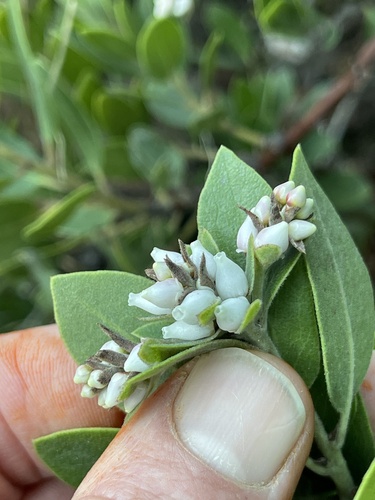
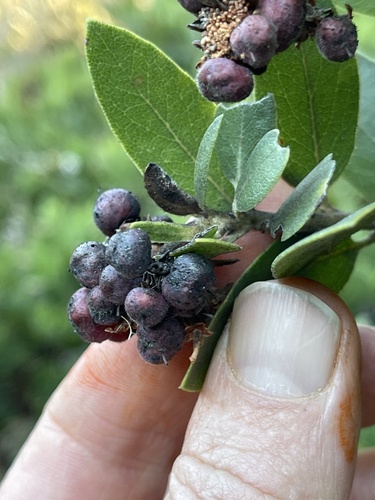
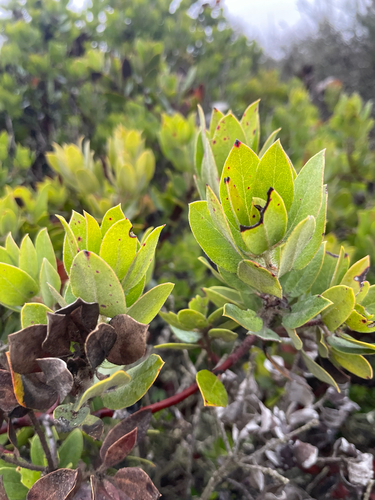
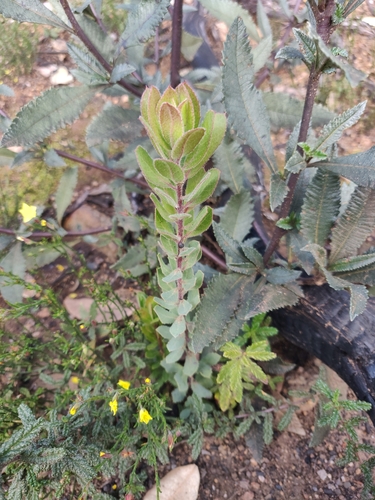
Brittleleaf Manzanita
Arctostaphylos crustacea subsp. crustacea
Care
full sun, part shade
very low
Fast; Prefers sand or sandstone, often over a layer of hardpan.
3–8ft tall , 10–10ft wide
Jan-Dec
Evergreen
Resistant
Friendly
Berries made into cider drink, traditional Indigenous use
Supports up to 68 butterfly and moth species in Mediterranean California
Coastal chaparral and scrub of the Diablo Range and Santa Cruz Mountains from 500-2000 ft elevation, endemic to the Bay Area region.
Care Guide
Planting
Plant your Brittleleaf Manzanita in full sun in fast-draining soil - ideally sandy or sandy loam, especially if you have hardpan underneath. The winter or early spring rainy season is your best window for planting in the Bay Area. Space plants 4-6 feet apart if you're creating a hedge, and avoid amending heavy clay soils; this plant prefers lean, well-draining conditions and won't tolerate soggy feet.
After Planting
Water your new plant weekly through the first summer, then taper to twice monthly once established - after year two, you should rarely need to water beyond what nature provides. The #1 mistake Bay Area gardeners make is overwatering; this is a chaparral plant adapted to drought, and excess water, especially in winter, causes root rot. Minimal pruning is needed; remove only dead or crossing branches in spring after flowering ends. Once established, this evergreen shrub is remarkably low-maintenance and cold-hardy to 5°F.
Visit Calscape for more information about Brittleleaf Manzanita
Endangered & Threatened Species Supported
California Species of Special Concern; population fluctuations noted
Brush rabbit is a Species of Special Concern
Wildlife Supported
Insects

Larvae feed on Arctostaphylos leaves during spring development

Caterpillars utilize manzanita foliage as primary host plant

Spring forager on manzanita flowers and pollen

Early season nectar source during spring foraging

Colony nutrition source during spring bloom period

Adult flies feed on manzanita pollen and nectar

Larvae mine manzanita leaves during growing season

Host-specific phloem feeder on Arctostaphylos crustacea
+1 more species
Mammals

Critical winter browse when other food sources limited

Year-round shelter and browse in dense manzanita thickets
Birds

Fall and winter seed consumption important for diet