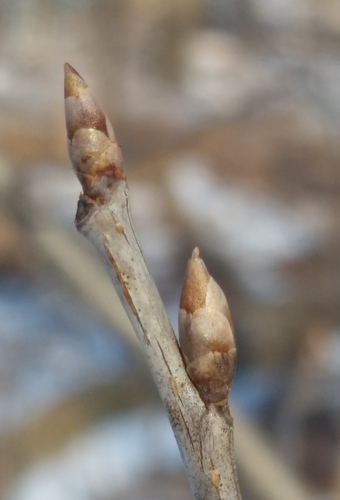
Bitter-berry
Prunus virginiana var. demissa
Care
full sun, part shade
moderate
Medium; Tolerates a variety of soils.
15–25ft tall , 10–20ft wide
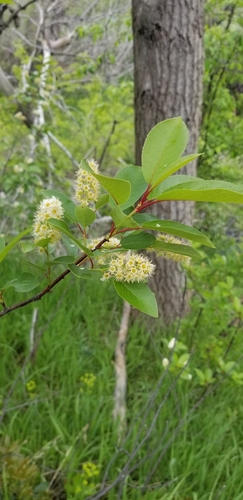
Mar-May
Deciduous
Prized
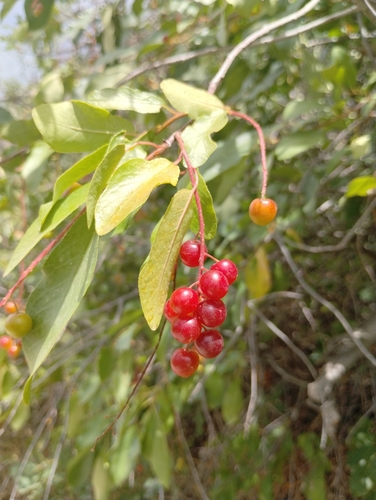
Berries eaten fresh or cooked. Traditional Indigenous food source
Supports up to 262 butterfly and moth species in Mediterranean California
Riparian woodlands and montane forests of the Sierra Nevada, Cascade Range, and northern California mountains from 2000-7000 ft elevation, extending to Oregon and Washington.
Care Guide
Planting
Plant your bitter-berry in full sun or part shade in fall or early spring. It tolerates a variety of soils and prefers medium drainage, so you don't need to amend heavily - just ensure water doesn't pool around the roots. Space it with room to reach 15–25 feet tall and wide, as it will sucker and expand over time. This native California shrub is extremely cold-hardy and will thrive in the Bay Area's climate.
After Planting
Water moderately for the first year to establish a strong root system, then cut back to a maximum of twice monthly during summer once established. In year one, expect deciduous leaf drop in fall and flowering in March through May - this is normal. Pruning needs are minimal; shape it as a shrub or small tree based on your preference. The #1 mistake is overwatering: this plant is drought-tolerant once established, and excess water causes more problems than neglect.
Wildlife Supported
Birds

Fruits consumed during breeding season and fall migration; peak availability Aug-Sep

Gregarious feeding on fruits; critical winter nutrition source

Important fall and winter food source; sustains populations through cold months
Insects

Colonies defoliate branches Apr-Jun; pupate in late June

Larvae feed on foliage and developing fruit; primary host plant in Rosaceae

Specialized early spring forager; adults emerge with Prunus flowers

Large caterpillars feed on foliage; overwinter as pupae in silk cocoons

Caterpillars strip leaves May-Jun; can cause significant defoliation
Mammals

Pre-hibernation foraging; fruits consumed Aug-Oct for caloric accumulation
Browse new growth and foliage during growing season