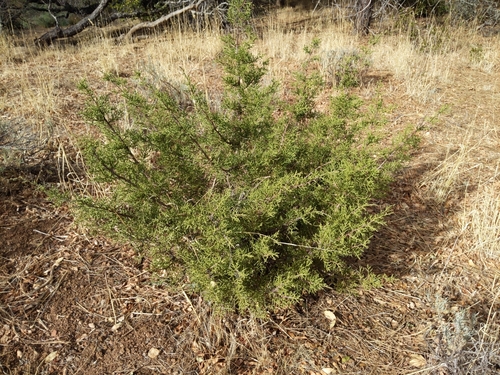
California Juniper
Juniperus californica
Care
full sun, part shade
very low
Fast, Medium; Typically coarse, well drained and low nutrient soil such as decomposed granite.
10–26ft tall , 20–20ft wide
Evergreen
Resistant
Seeds eaten raw or roasted
Supports up to 53 butterfly and moth species in Mediterranean California
Desert scrub and Joshua tree woodland of the Mojave Desert and interior chaparral of southern California from 2000-5000 ft elevation, extending to the Colorado Desert.
Care Guide
Planting
Plant California Juniper in full sun with fast-draining soil - decomposed granite or coarse, low-nutrient soil is ideal. Space plants generously since they grow wider than tall, reaching 10–26 feet. Plant in fall or winter when the plant is dormant to help it establish before summer heat. This juniper tolerates a range of well-drained soils and even poor, rocky ground, so amend heavily if your garden has clay or compacted soil.
After Planting
Water weekly during your first summer, then cut back to once monthly by the second year once established. Year one is critical - consistent watering helps the roots develop, but overwatering in poorly drained soil will kill the plant faster than drought. The #1 mistake is planting in heavy clay or keeping the soil too wet; California Juniper evolved in sparse, dry conditions and demands drainage above all else. After establishment, you can nearly ignore it - water only during severe droughts, and prune only to shape or remove dead wood.
Visit Calscape for more information about California Juniper
Endangered & Threatened Species Supported
California Species of Special Concern
California Species of Special Concern
Wildlife Supported
Insects

Larvae feed on juniper foliage; primary host plant for this species

Important larval host; caterpillars consume juniper foliage year-round in mild California climate

Early spring larval development on juniper foliage

Larval feeding on juniper foliage during spring development

Mistletoe grows as hemiparasite on California juniper branches
Sap-feeding insect utilizing juniper year-round in arid California habitats

Feed on juniper plant sap during summer months

Larval host plant; caterpillars feed on juniper foliage in spring
Birds

Cache juniper seeds in autumn and consume throughout winter; important seed dispersal agent

Builds nests in juniper shrubs and small trees during breeding season

Nests in cavities within juniper trees during breeding season

Utilizes dense juniper foliage for roosting and shelter during winter in California mountains
Mammals

Cache juniper seeds in autumn for winter food storage