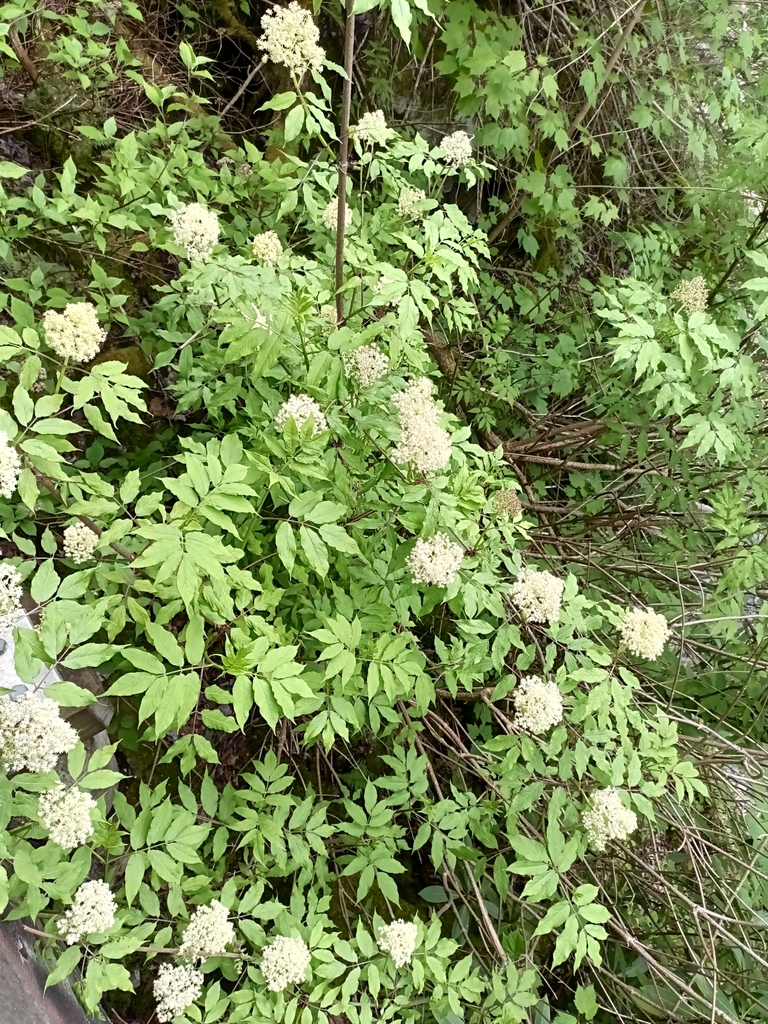
Red elderberry
Sambucus racemosa
Care
full sun, part shade
low
Fast, Medium; Favors deeper, loamy sands and silts and nutrient rich sites with good drainage.
7–20ft tall
Mar-Aug
Prized
Riparian areas, oak and mixed evergreen forests from the north coast and Cascade Range to the Sierra Nevada south to Fresno County, below 5000 ft elevation, extending to British Columbia.
Care Guide
Planting
Plant your red elderberry in full sun to part shade in a spot with fast to medium drainage - it thrives in deeper, loamy, nutrient-rich soil and won't tolerate waterlogged conditions. Space it where it has room to grow into a 7- to 20-foot shrub or small tree. Spring is the ideal planting season in the Bay Area. While it's adaptable to Bay Area conditions, it naturally grows in moist woodland areas, so avoid the driest microclimates in your garden.
After Planting
Water weekly during your first summer to establish a deep root system, then transition to low water once established - this plant is drought-tolerant once it settles in. Red elderberry is deciduous and will drop its leaves in winter, which is normal. The main mistake people make is overwatering; this shrub prefers drier conditions than its native riparian habitat might suggest, especially in the Bay Area's dry summers. Prune in late winter if needed to shape it, but the plant requires minimal maintenance once established.
Endangered & Threatened Species Supported
California Species of Special Concern
Wildlife Supported
Birds
Critical fall migration fuel source; berries consumed Aug-Oct during southward migration
High-lipid berries essential for migratory energy; peak consumption Sep-Nov
Important late-season food; berries consumed during migration staging
Fall migration and overwintering; berries consumed throughout season
Important migrant food source; berries fuel long-distance fall migration
Supplemental food source in late summer/fall; less primary than other species
Opportunistic fruit consumption during migration; supplements insect diet
Insects
Larval host plant; caterpillars feed on foliage May-Jul
Spring bloom period; flowers provide early-season nectar
Early spring pollinator; nectar and pollen source
Polyphagous larval host; caterpillars feed on foliage
Mammals
Fall foraging for hyperphagia; berries consumed Jul-Sep before hibernation
Browse bark, twigs and foliage; secondary food source
Browse shrub foliage year-round; primary use spring-fall
Browse foliage and twigs; preference increases in winter as other food scarce