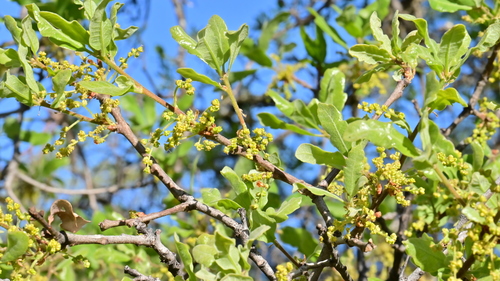
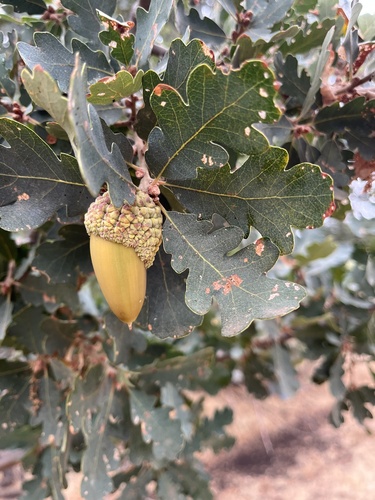
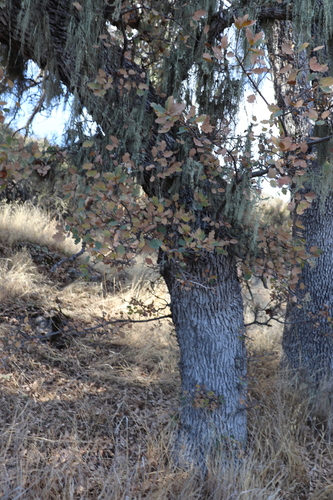
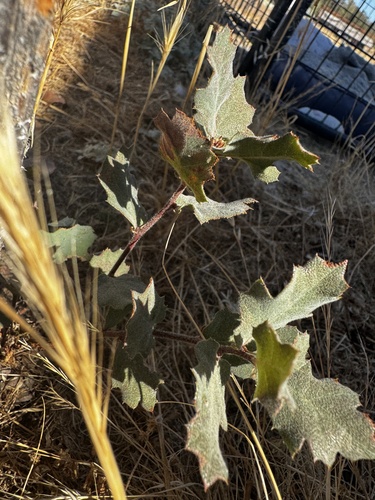
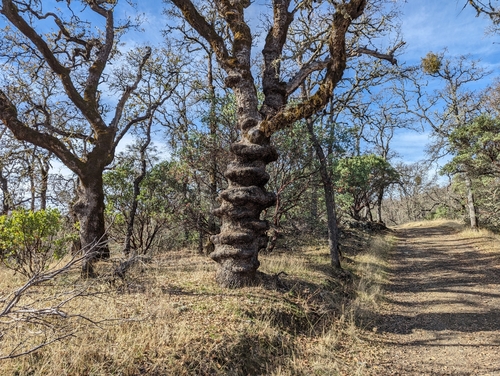
Blue oak
Quercus douglasii
Care
full sun, part shade
very low
Fast; Tolerant of a variety of soils as long as adequate drainage is provided.
16–82ft tall , 30–30ft wide
Jan-Dec
Deciduous
Resistant
Acorns leached and ground into flour for traditional Indigenous food
Supports up to 275 butterfly and moth species in Mediterranean California
Oak woodlands and grasslands of the Sierra Nevada foothills, interior valleys, and south coast ranges from Shasta County to Kern County, 500-4000 ft elevation.
Care Guide
Planting
Plant your blue oak in full sun on a well-drained slope or site with fast-draining soil - drainage is non-negotiable for this tree. Space it generously, as it will eventually spread 30+ feet wide and grow 80+ feet tall, so give it room away from structures and other plants. Plant in fall or winter when the tree is dormant to help it establish before the dry season.
After Planting
Water weekly for the first summer, then taper to monthly irrigation once established - by year two or three, you should need to water only once a month during summer at most. The #1 mistake people make is overwatering; this is a drought-tolerant tree that actually prefers dry conditions, so resist the urge to coddle it. Expect slow growth, especially in the first few years, and minimal pruning needs - just remove dead or crossing branches in winter. Your blue oak will drop its leaves in winter as a deciduous tree, which is completely normal.
Endangered & Threatened Species Supported
California Species of Special Concern
California Species of Special Concern
Wildlife Supported
Birds

Critical year-round food source; cache acorns in granary trees

Cache and consume acorns; important seed dispersal agent Sep-Nov

Forage on acorns and acorn-associated insects in autumn

Opportunistically forage on fallen acorns during autumn and winter
Insects

Larvae defoliate oaks in outbreak years; spring emergence Mar-May

Larvae feed on oak leaves; overwinter as eggs on twigs

Larvae feed on oak foliage; emerge from tent structures May-Jun

Nymphs feed on oak roots and xylem; adults May-Aug

Adults feed on oak foliage; larvae develop in dead wood

Larvae feed on oak foliage; overwinter as pupae

Forage on oak catkins and flowers during spring bloom
Larvae feed on oak leaves; multiple generations Apr-Sep
Mammals

Browse on leaves and young shoots; acorns eaten in fall

Graze on fallen acorns and browse foliage in oak woodlands