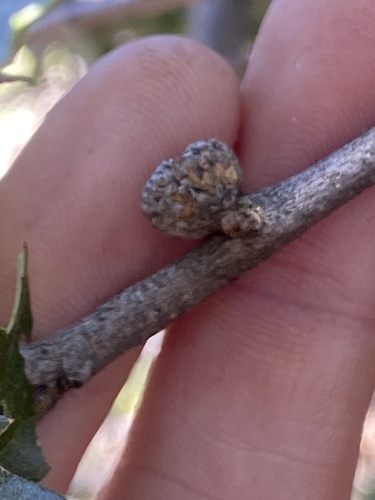
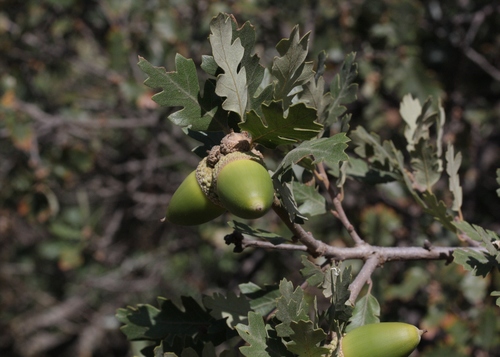
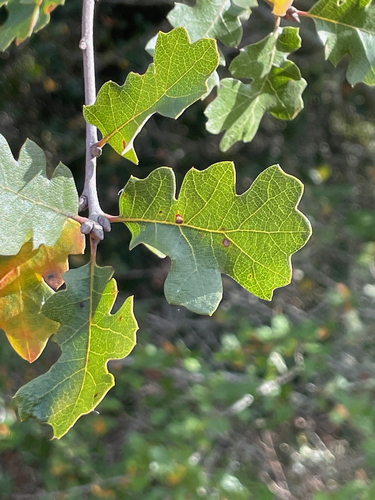
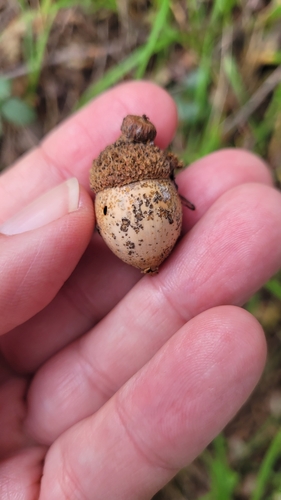
Scrub oak
Quercus berberidifolia
Care
full sun, part shade
very low
Fast, Medium; Most often found on eroded granite or sandstone soils.
15–20ft tall , 15–15ft wide
Jan-Dec
Evergreen
Resistant
Acorns leached and ground into flour for traditional Indigenous food
Supports up to 275 butterfly and moth species in Mediterranean California
Chaparral and oak woodland foothills from the Sierra Nevada to the Tehachapi Mountains, and scattered in the Coast Ranges, below 4000 ft elevation.
Care Guide
Planting
Plant your Scrub Oak in full sun to part shade in fall or winter for best establishment. It thrives in fast to medium-draining soil like you'd find on eroded granite or sandstone - if your soil drains slowly, amend heavily or choose a hillside spot. Space it with room to spread, especially if you're in a warmer Bay Area microclimate where it can reach several meters tall; in cooler areas it stays more compact. Mulch with a thick layer of oak leaves and add a few large rocks around the base.
After Planting
Water regularly through your first summer and into fall to establish deep roots, then cut back to once a month or less once established - the goal is to eventually refrain from summer watering altogether to honor its natural drought tolerance. In year one, resist the urge to water during dry summers; this is the #1 mistake people make with Scrub Oak. Minimal pruning is needed since this is an easy-care plant; let it grow naturally. It's evergreen and cold-hardy to 20°F, so it requires no special winter prep for the Bay Area.
Endangered & Threatened Species Supported
California Species of Special Concern
Wildlife Supported
Birds

Acorn caching and consumption September-December, major seed disperser and predator
Mammals

Year-round browse in coastal ranges and northern California
Primary browse species, especially critical in winter months when other forage limited

Acorn caching and consumption, September through winter

Acorn production and dispersal by jays and squirrels September-November, critical caching resource
Arachnids

Web construction among branches and foliage for prey interception
Insects

Wood-decomposer fungus on dead wood, creates habitat microstructure

Foraging on foliage and tending hemipteran colonies on branches

Spring through early summer feeding on leaves and stems

Parasitic plant hosted on branches year-round, provides mistletoe berries for winter bird forage