← Back to results

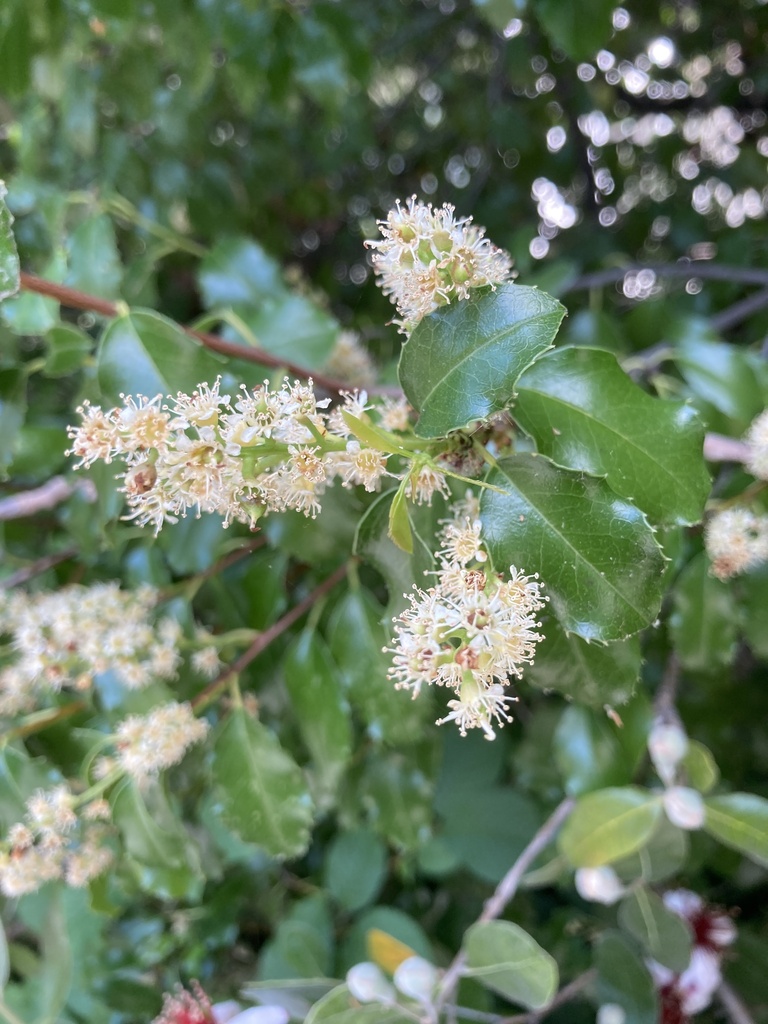
Hollyleaf cherry

Prunus ilicifolia

Care

Sun

full sun, part shade

Water

very low

Soil

Fast, Medium; Tolerant of a variety of soils but will grow largest and fastest in coarse, fast draining, relatively fertile garden soil.

Size

30–49ft tall , 20–20ft wide

Bloom

Jan-Dec

Foliage

Evergreen

Edible

Pits (kernels) cracked and eaten or processed for oil; used as traditional food

Keystone Plant

Supports up to 262 butterfly and moth species in Mediterranean California

Native Range

Chaparral and coastal sage scrub of southern California from Santa Barbara County to San Diego County, below 3000 ft elevation, extending to Baja California.

Care Guide

Planting

Plant your hollyleaf cherry in full sun in a location with fast or medium draining soil - it will grow largest and fastest in coarse, well-draining, relatively fertile garden soil, though it tolerates a variety of soil types. The best planting season isn't specified in the data, so choose either fall or early spring when the plant can establish roots before summer heat. Space it generously since it can eventually reach 30–49 feet tall, and ensure good drainage to prevent root problems.

After Planting

Water weekly for the first summer, then taper off as the plant establishes - once mature, it needs only very low water and can go a month or more between waterings in summer. The #1 mistake Bay Area gardeners make is overwatering; this California native is adapted to drought and will suffer in soggy soil. You won't need to prune heavily unless you want to shape it as a hedge or control its size, and expect small white flowers in spring that birds will love for the resulting cherries.

Visit Calscape for more information about Hollyleaf cherry

Wildlife Supported

Mammals

Fruit · Year-Round

critical summer-fall forage July-October for pre-hibernation feeding

Birds

Fruit · Year-Round

opportunistic frugivory when available, year-round resident

Fruit · Year-Round

consume drupes June-October during ripening

Insects

Larval Host · Year-Round

larvae feed on Prunus foliage May-July

Larval Host · Year-Round

larvae defoliate foliage March-June in colonial tents

Larval Host · Year-Round

caterpillars feed on foliage April-August

Larval Host · Year-Round

larvae feed on foliage April-August, multiple generations

Larval Host · Year-Round

larvae feed on new growth May-July

Where to Buy

East Bay Wilds

2110 Eighth St, Suite 202, Berkeley

Fri 9:30am-4pm (occasional Sat, call ahead)

1.5 mi (510) 409-5858 Website
Native Here Nursery

101 Golf Course Dr, Tilden Regional Park, Berkeley

Sat 10am-2pm

3.0 mi (510) 549-0211 Website
Watershed Nursery

601A Canal Blvd, Richmond

Tue-Sun 10am-4pm

5.0 mi (510) 234-2222 Website
Yerba Buena Nursery

12511 San Mateo Rd, Half Moon Bay

Tue-Sat 9am-4pm

12.0 mi (650) 851-1668 Website