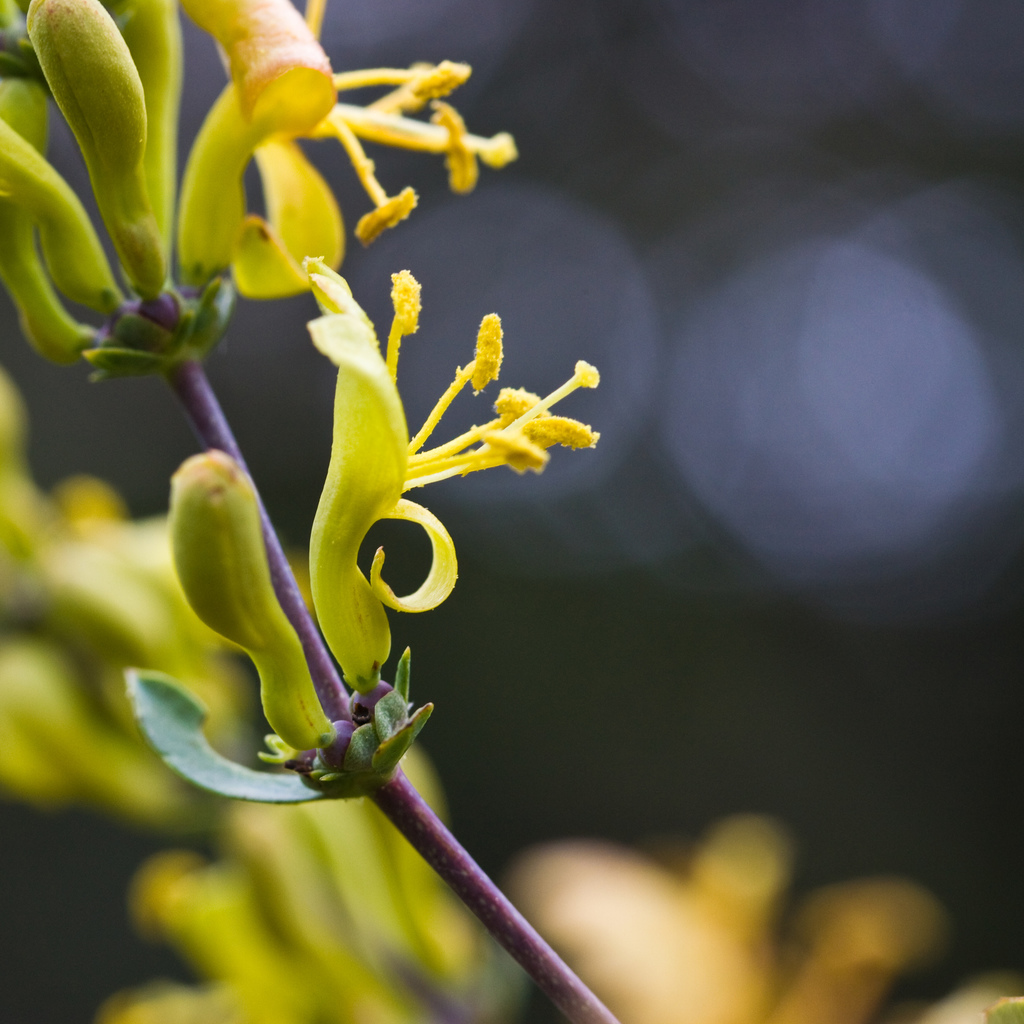
Southern honeysuckle
Lonicera subspicata
Care
full sun, part shade
low
Medium, Slow; Tolerant of a variety of soils including clay and decomposed granite.
8–8ft tall , 20–20ft wide
Mar-Aug
Evergreen
Resistant
Yes
Prized
Berries eaten fresh or cooked; traditionally used as food
Southern California chaparral in San Diego, Orange, and Ventura counties, 500-3500 ft elevation.
Care Guide
Planting
Plant Southern Honeysuckle in full sun to part shade in spring or fall, spacing it where it can climb on a trellis, fence, or neighboring shrub for support. This California native tolerates a wide range of soils - clay, decomposed granite, and everything in between - but ensure the soil has medium to slow drainage; it won't survive in soggy conditions. The plant will eventually reach 8 feet or more, so give it room to sprawl.
After Planting
Water weekly during the first summer to establish a deep root system, then taper to once or twice monthly during summer once established. The biggest mistake Bay Area gardeners make is overwatering; this is a dry-habitat plant that actually prefers neglect once it's settled in. After the first year, prune as needed to direct growth and remove dead wood, though the plant is fairly low-maintenance and deer-resistant, making it excellent for hillsides and hard-to-reach spots.
Visit Calscape for more information about Southern honeysuckle
Endangered & Threatened Species Supported
Listed under California ESA; range has contracted significantly
Sonoran bumblebee, California candidate
Wildlife Supported
Birds
Year-round resident in southern California; important winter nectar source
Insects
Queens foraging during colony establishment
Early spring nectar source for emerging solitary bees
Early season foraging resource for queen emergence
Host plant for larvae; multiple generations year-round in southern California
Early foraging resource in southern California range
Early spring nectar and pollen source
Larval host plant; spring brood utilizes new growth
Small bee foraging on honeysuckle flowers
+4 more species