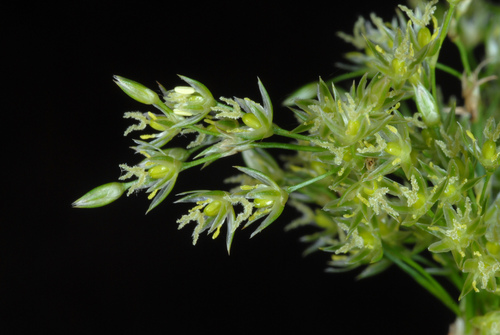
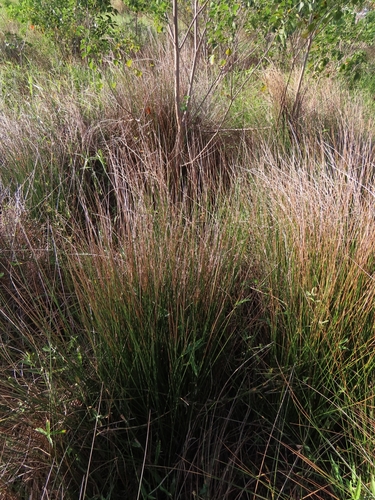
Common rush
Juncus effusus
Care
part shade
moderate
Slow, Standing; Tolerates a variety of soils.
5–7ft tall , 3–3ft wide
Jun-Aug
Evergreen
Resistant
Wetlands and riparian areas throughout California, sea level to 8000 ft elevation, with range extending to the Pacific Northwest.
Care Guide
Planting
Plant common rush in part shade in an area with consistently moist to wet soil - it thrives in slow-draining or even standing water, making it ideal for bioswales, pond edges, and other water features. It tolerates a variety of soil types, so don't worry about amending; just ensure the spot stays wet. Plant in spring or fall for best establishment, spacing plants about 18-24 inches apart since they'll grow into large clumps reaching 5-7 feet tall.
After Planting
Water weekly for the first summer to establish the plant, then reduce to once weekly or less once established, depending on your soil moisture. Common rush requires minimal pruning and maintenance - the main mistake Bay Area gardeners make is planting it in regular garden beds with standard drainage, where it'll struggle; this plant wants wet feet, so save it for wet spots or containers you can keep consistently moist. It's evergreen and will provide year-round structure in your garden.
Endangered & Threatened Species Supported
Brush rabbit is a Species of Special Concern
Wildlife Supported
Birds

Year-round resident in California marshes; staple wetland diet component

Dabbling duck feeds on rush shoots and seeds in wetland habitats; important in California marshes

Fall migration staging; feeds on rush seeds in preparation for winter

Winter visitor to California wetlands; grazes on emergent vegetation
Insects

Larval development in wetland margins; adults perch on rush stems

Larval host; aquatic beetle larvae feed on submerged rush tissues

Early spring visitor to rush stands for pollen collection
Mammals

Browses on soft rush shoots year-round in wetland margins

Spring grazing on new growth in northern California wetlands and riparian zones
Reptiles

Uses dense rush beds for basking and shelter; relies on associated invertebrates