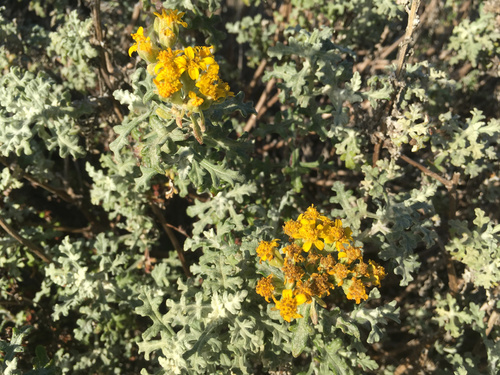
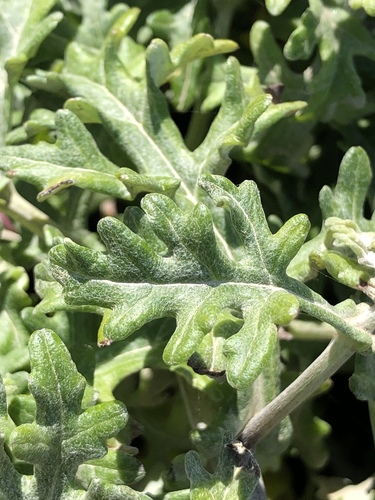
Seaside woolly sunflower
Eriophyllum staechadifolium
Care
full sun, part shade
low
Fast; Sandy.
2–5ft tall , 4–5ft wide
Mar-Aug
Evergreen
Resistant
Friendly
Prized
Coastal scrub and bluffs from Mendocino County to San Diego County, sea level to 1000 ft elevation.
Care Guide
Planting
Plant your Seaside Woolly Sunflower in full sun with fast-draining, sandy soil - this is non-negotiable for success in the Bay Area. Space plants 2 to 5 feet apart depending on whether you want them to fill in as a groundcover. Spring is the ideal planting time to let the plant establish through the growing season.
After Planting
Water twice a month through your first summer to help it establish, then cut back to once a month or less once established - many gardeners kill this plant with too much water, not too little. After the first year, you can stop irrigating entirely and let summer drought be your friend. The plant blooms from March through August and is evergreen, so you'll have foliage year-round; prune as needed to maintain shape, but this low-maintenance native can handle neglect and will tolerate cold down to 25°F.
Visit Calscape for more information about Seaside woolly sunflower
Endangered & Threatened Species Supported
Callippe fritillary subspecies listed as Threatened under CESA
California species of special concern
Wildlife Supported
Insects

Early season foraging for queen and worker provisioning

Early spring colony establishment and worker foraging

Larval host plant; overwinter as pupae on or near plant

Spring and early summer nectar source for colony growth

Adult nectar source during spring emergence and flight

Spring pollen feeding and overwintering aggregation sites

Adult nectar source during spring flight periods

Spring adult foraging for energy
+5 more species