Fingertips
Dudleya edulis
Care
full sun, part shade
very low
Fast, Medium; While it appears to be tolerant of a variety garden soils, it is found in the wild almost entirely in sandstone soils.
0–0ft tall , 1–1ft wide
Mar-Aug
Evergreen
Resistant
Friendly
Leaves eaten fresh or cooked; traditional Indigenous food.
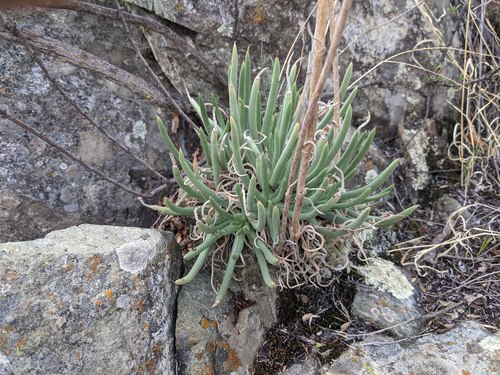
Coastal bluffs and scrub from Santa Barbara County to San Diego County, below 1000 ft elevation on maritime chaparral and coastal sage scrub.
Care Guide
Planting
Plant Fingertips in full sun to part shade in fast-draining soil - ideally sandy or gritty mix that mimics its native sandstone habitat. Space it where water won't pool around the base, making containers and rock gardens ideal homes for this slow-growing succulent. Plant in spring or fall when temperatures are mild, and avoid areas where winter moisture tends to linger.
After Planting
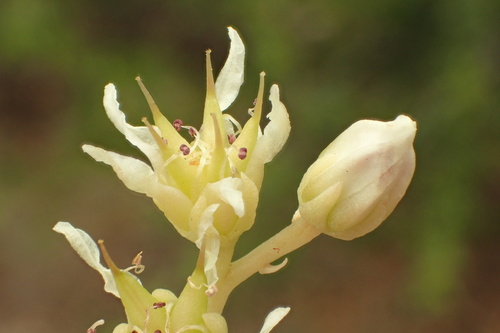
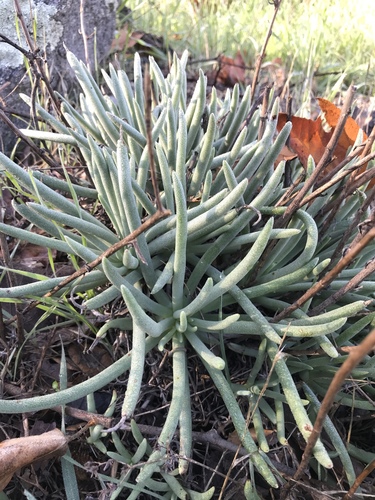
Water deeply but infrequently during the first growing season, then cut back to once a month or less once established - this plant thrives on neglect. The #1 mistake is overwatering; Fingertips stores water in its fleshy leaves and rots quickly in soggy soil, so err on the side of dry. No pruning needed; just remove any dead leaves at the base, and enjoy the white spring flowers and orange-tipped foliage without fussing.
Endangered & Threatened Species Supported
California Endangered Species Act listing
Wildlife Supported
Insects

Host plant for larval development; spring foraging resource

Host plant for larval development; early season colony establishment

Host plant for larval provisions; spring nesting period

Host plant for larval development; early season foraging

Caterpillar host plant; larval development on succulent foliage

Forages on available plant material; secondary food source