← Back to results

California Sycamore

Platanus racemosa

Care

Sun

full sun

Water

moderate

Soil

deep moist soils; tolerates clay and seasonal flooding

Size

30–80ft tall , 30–50ft wide

Foliage

Deciduous

Deer

Resistant

Native Range

California riparian corridors from Sacramento Valley to Baja California

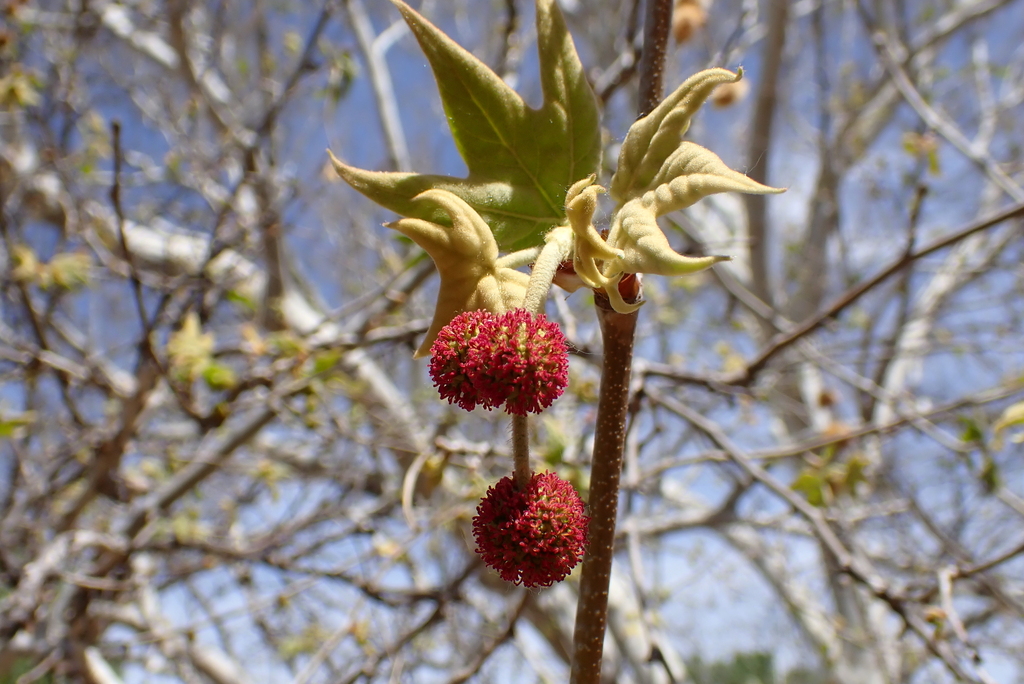
Inconspicuous ball-shaped flower clusters

White mottled bark; massive trunk; needs space; excellent shade tree

Care Guide

Planting

Plant your California Sycamore in full sun with plenty of space - this tree grows 30 to 80 feet tall and up to 50 feet wide, so give it room away from structures and power lines. It tolerates clay and sandy soils and actually does fine in seasonally wet conditions, so drainage isn't a dealbreaker, but it thrives in deep, moist soils. Plant in fall or winter when the tree is dormant to help it establish before summer heat.

After Planting

Water regularly during your tree's first growing season to keep the soil consistently moist; this is critical since sycamores naturally grow near streams and need reliable water to thrive. Once established, you can back off to watering just once a month in summer. The biggest mistake people make is underwatering - treat it like a tree that remembers its riparian home, and it'll reward you with those beautiful peeling bark and fall color without much fuss.

Visit Calscape for more information about California Sycamore

Endangered & Threatened Species Supported

California scrub-jay Aphelocoma californica
CA Special Concern

California Species of Special Concern

Red-shouldered Hawk Buteo lineatus
CA Special Concern

California Species of Special Concern

Wildlife Supported

Birds

Nesting · Year-Round

Cavity nester; utilizes large hollow cavities for breeding Jan-Aug, yearlong shelter

Nesting · Year-Round

Cavity excavator and nester; also uses for foraging and shelter

Nesting · Year-Round

Cavity nester; breeds in sycamore woodlands Apr-Jul

Nesting · Year-Round

Nests in large sycamores along streams and riparian corridors Feb-Aug

Shelter · Year-Round

Roosts and nests in large sycamores; utilizes for communal roosting sites

Seeds · Year-Round

Forages on sycamore seeds and seed fluff; uses as nesting material

Foliage · Year-Round

Gleans insects from foliage during fall/winter migration and overwintering in riparian habitat

Foliage · Year-Round

Forages for insects in foliage during breeding season Apr-Aug

+3 more species

Insects

Larval Host · Year-Round

Multiple lepidopteran species depend on sycamore foliage for larval development

Larval Host · Year-Round

Primary larval host plant; caterpillars feed on young foliage April-July

Larval Host · Year-Round

Larval host; caterpillars utilize sycamore foliage in riparian corridors

Shelter · Year-Round

Parasitic plant that provides habitat structure and winter berries for birds

Foliage · Year-Round

Sap feeder on foliage; can cause aesthetic damage but natural population control exists

Mammals

Shelter · Year-Round

Utilizes cavities and dense canopy for den sites and shelter year-round

Where to Buy

East Bay Wilds

2110 Eighth St, Suite 202, Berkeley

Fri 9:30am-4pm (occasional Sat, call ahead)

1.5 mi (510) 409-5858 Website
Native Here Nursery

101 Golf Course Dr, Tilden Regional Park, Berkeley

Sat 10am-2pm

3.0 mi (510) 549-0211 Website