Ithuriel's Spear
Triteleia laxa
Care
full sun, part shade
very low
well-drained; tolerates clay; summer dry
1–2ft tall , 0–0ft wide
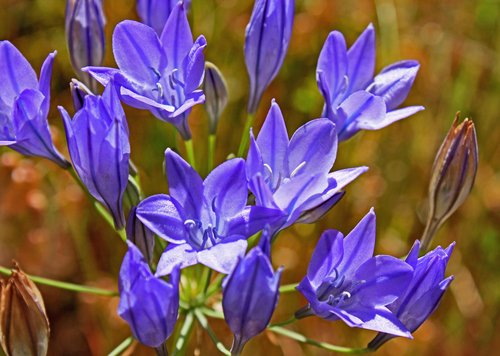
Apr-Jun · blue, violet
Deciduous
Resistant
Friendly
Prized
Corms eaten roasted; traditional Indigenous food use
California and Oregon in grasslands and open woodlands
Open airy clusters of blue to violet trumpet-shaped flowers
'Queen Fabiola' is popular cultivar; reliable and showy; summer dormant
Care Guide
Planting
Plant your corms 4 inches deep in fall or early winter, spacing them to mass for best effect - they'll naturalize over time. Ithuriel's Spear thrives in full sun or part shade and is remarkably unfussy about soil: it prefers sandy soil but does just fine in clay, even under native oaks. Make sure your planting area has good drainage, especially important since this plant wants to dry out during summer dormancy.
After Planting
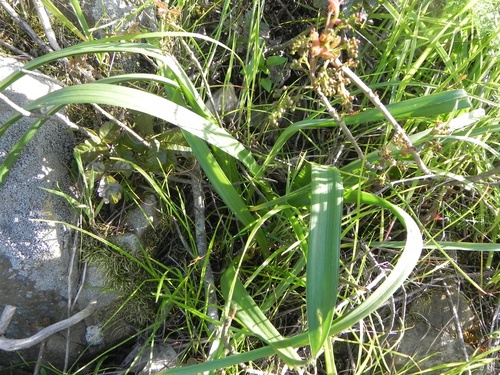
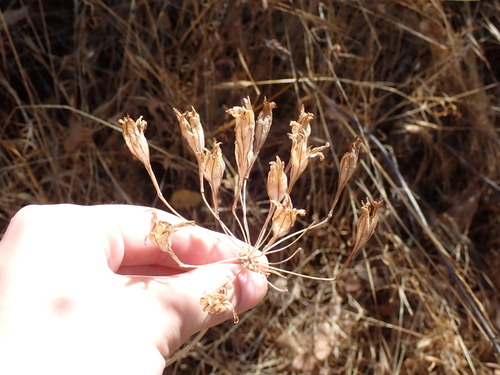
Water regularly during the first growing season to establish the plant, then step back and let nature take over - once established, aim for no more than twice a month in summer, or skip watering altogether and let it go dormant. The #1 mistake is overwatering in summer; this plant is happiest when it dries out, which actually makes it healthier and more robust. Watch for grassy leaves in late winter, enjoy purple star-shaped flowers in spring (April–June), and expect the foliage to die back naturally as summer arrives. Don't dig up the corms thinking they're dead - they're just resting underground until next season.
Endangered & Threatened Species Supported
Federal Threatened; California Endangered; Species of Special Concern
California Species of Special Concern
Wildlife Supported
Insects

Spring blooms coincide with colony founding Apr-Jun

Early spring foraging Apr-Jun for colony establishment and worker production

Important native bee genus utilizing pollen resources during bloom

Larval food plant relationship during spring growing season

Spring blooms provide early season nectar Apr-Jun
Spring pollen collector during peak blooming Apr-May

Adult hover flies forage on nectar during bloom period

Spring foraging during Triteleia laxa bloom peak
+5 more species