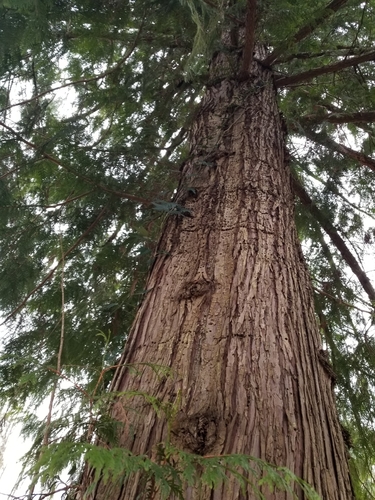
Western Red Cedar
Thuja plicata 'Emerald Cone'
Care
full sun, part shade
moderate
Fast, Medium, Slow; Prefers loamy soils.
40–230ft tall
Mar-May
Evergreen
Resistant
Horticultural cultivar; parent species Thuja plicata native to northern California coastal redwood and conifer forests, extending to Oregon and Washington.
Care Guide
Planting
Plant your Emerald Cone in full sun to part shade in a location with fast to medium drainage; it prefers loamy soil but tolerates a range of soil types. Space it with room to grow - this cultivar reaches 40+ feet if left unpruned, though you can train it as a 6-foot hedge with regular pruning. Plant in spring or fall when the Bay Area soil is moist but not waterlogged.
After Planting
Water weekly during your first summer to keep the soil moist as the root system establishes, then transition to moderate watering once it's growing vigorously. Prune in spring to shape it as a hedge or control its height; Western red cedar responds well to training and can be kept dense and compact with consistent cutting. Your biggest mistake will be underwatering during the first year - this tree needs consistent moisture to get established, even though mature plants are fairly drought-tolerant.
Endangered & Threatened Species Supported
California Species of Special Concern
Wildlife Supported
Birds

Cavity nesting and foraging for wood-boring insects in bark and heartwood

Nomadic winter visitor; key fall-winter seed food in northern California

Nesting and roosting in dense conifer canopy; year-round resident

Irregular winter irruption; forages on cone seeds December-February
Insects

Spring population explosion on new growth; primary host plant

Larvae develop in bark galleries; damage stress-tolerant trees June-August

Wood-boring larvae develop over 2+ years; weakens branches and stems

Larvae bore wood; attracted to recently dead or stressed trees June-August

Larvae defoliate foliage spring-early summer; outbreak potential

Caterpillars feed on foliage April-June; two generations annually

Larvae mine foliage May-August; specialized cedar host
Mammals

Browsing on foliage and shoots; increased in winter when other browse unavailable

Winter browse when preferred forage depleted; northern California populations