← Back to results

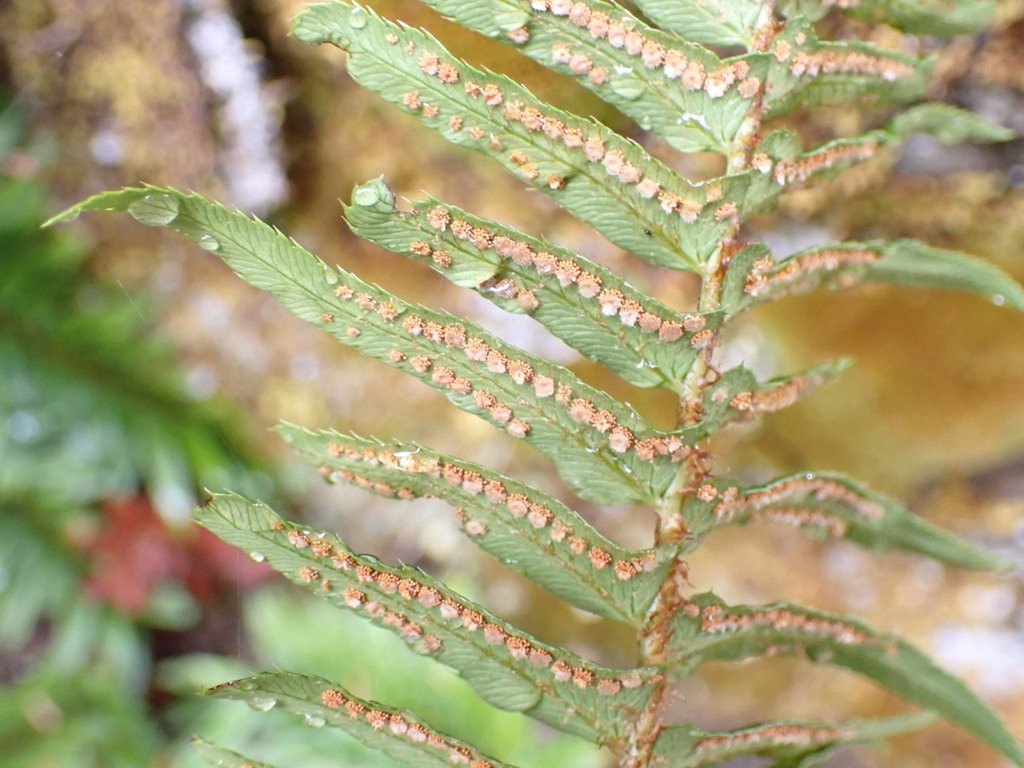
Western Sword Fern

Polystichum munitum

Care

Sun

part shade, full shade

Water

moderate

Soil

moist, humus-rich, well-drained; acidic

Size

2–4ft tall , 2–4ft wide

Foliage

Evergreen

Deer

Resistant

Container

Friendly

Native Range

Pacific Coast from Alaska to Southern California

Non-flowering; reproduces by spores

Backbone of the shade garden; extremely reliable; nearly indestructible

Care Guide

Planting

Plant your Western Sword Fern in partial to full shade - it's very forgiving about light as long as it's not in direct sun. Choose a spot with moist, humus-rich, well-drained soil; the plant prefers slightly acidic soil but tolerates clay as long as moisture stays consistent. Space plants 3-5 feet apart since they'll eventually spread 5 feet wide. Fall through early spring is ideal for planting in the Bay Area.

After Planting

Water weekly with a deep soaking for the first summer to establish a strong root system. Once established (typically by year two), you can cut back to watering just twice a month in summer, though the plant performs best with at least weekly deep watering year-round. Don't remove the old, withered fronds - they'll naturally stay attached to the base and eventually drop off on their own. The #1 mistake is letting the soil dry out; Western Sword Fern needs consistent moisture even once established, so set a weekly watering reminder rather than waiting for the plant to look droopy.

Visit Calscape for more information about Western Sword Fern

Endangered & Threatened Species Supported

Spotted Frog Rhacophilus guttalus
Federal: Threatened, CA: Endangered

Listed under ESA in 1967; California's only native frog species that is state-endangered

Wildlife Supported

Amphibians

Shelter · Year-Round

Critical refuge under fern fronds in moist forest floor microhabitat

Shelter · Year-Round

Uses dense sword fern patches as shelter in riparian understory

Birds

Shelter · Year-Round

Uses dense fern clumps for shelter and foraging cover year-round

Nesting · Spring

Uses fern fronds for nest lining material during spring nesting

Arachnids

Larval Host · Year-Round

Pathogen associated with fern rhizosphere in moist conditions

Larval Host · Year-Round

Fungal associate in moist understory where fern dominates

Insects

Foliage · Year-Round

Larval host plant for caterpillar feeding on fern fronds

Foliage · Year-Round

Specialist beetle feeding on sword fern foliage

Foliage · Year-Round

Specialist herbivore feeding on frond sap throughout year

mod Hover fly
Shelter · Year-Round

Uses fern fronds for shelter and overwintering

Mammals

Nesting · Year-Round

Lines nest cavities with fern fronds; uses understory for foraging habitat

Where to Buy

Oaktown Native Plant Nursery

702 Channing Way, Berkeley

Wed-Sun 10am-5pm

1.0 mi (510) 387-9744 Website
East Bay Wilds

2110 Eighth St, Suite 202, Berkeley

Fri 9:30am-4pm (occasional Sat, call ahead)

1.5 mi (510) 409-5858 Website
Native Here Nursery

101 Golf Course Dr, Tilden Regional Park, Berkeley

Sat 10am-2pm

3.0 mi (510) 549-0211 Website
Yerba Buena Nursery

12511 San Mateo Rd, Half Moon Bay

Tue-Sat 9am-4pm

12.0 mi (650) 851-1668 Website